


 عربى
 中文简体
Search by posts
Calendar
Product Categories
Industry News
 By Admin
Pneumatic Needle Scaler Uses: Rust, Scale, Weld Slag, and Surface Preparation
If you have ever tried to clean rust out of a fillet weld, a riveted frame, or a pitted casting with a wire brush, you know the problem: the brush rides over the surface and leaves the deepest contamination behind. A pneumatic needle scaler solves that access problem. It drives a bundle of hardened steel needles against the work with compressed air, so the needles hammer into pits, corners, and irregular profiles instead of skating across them. The short answer is that a pneumatic needle scaler is used for surface preparation and deposit removal: rust, mill scale, old paint, undercoating, weld slag, spatter, concrete laitance, foundry sand, and similar stubborn material. It is not a finishing tool. It is a cleaning and preparation tool, and it earns its place where a grinder is too aggressive, a wire brush is too shallow, and abrasive blasting is impractical because of containment, dust, or access. Inside the tool, a piston reciprocates under compressed air and strikes the rear of a needle bundle. The needles are held loosely in a retaining collar, so each one can follow the local contour of the surface. That is the key difference from a rotary tool. The needles do not cut or grind; they peen and chip. On rust, the repeated impact breaks the bond between the oxide and the base metal. On weld slag, it fractures the glassy layer. On concrete, it breaks away weak laitance and form-release residue without removing sound material. The result is a clean, dimpled surface that is usually suitable for inspection and for many coating systems. Because the needles are independent, the tool can work around weld toes, bolt heads, stiffeners, and inside corners. A grinder cannot reach those areas without gouging. A wire brush often burnishes the surface and can smear contaminants. A needle scaler is therefore common in fabrication shops, shipyards, rail maintenance, foundry cleanup, bridge repair, and heavy-equipment refurbishment. For a broader explanation of the tool category and its working principle, see how pneumatic needle scalers work. The practical point is simple: the tool is at its best when the surface is uneven, the contamination is brittle, and access is tight. Needle scalers are specified by the job, not by the catalog category. The same basic mechanism handles several distinct tasks, but the needle size, tool body, and access shape change the result. For inside corners, fillet welds, and recessed frames, a corner needle scaler is usually the better shape because the needle bundle can be presented at an angle without the tool body blocking the work. That is the role of the RH464 corner needle scaler, which is built for cleaning access where a straight body cannot sit flat. For small repairs, automotive panels, and compact assemblies, a mini or compact straight scaler gives better control and lower air demand. The RH460 mini compact pneumatic needle scaler is the kind of tool used where a full-size scaler would be clumsy and a wire brush would not reach the bottom of the pits. For general fabrication, tank work, and heavier surface cleaning, a portable industrial straight needle scaler is the workhorse choice. It offers more coverage and a more direct push into flat or gently curved steel than a compact tool. The RH462 portable industrial straight needle scaler fits that middle ground between reach and control. Buyers often compare needle scalers by price alone, then discover that the tool body shape limits where it can work. The table below gives the practical distinction. Use it as a starting point, then confirm the needle bundle, air consumption, and spare-parts availability with the supplier. A useful rule is to choose the largest tool that can sit squarely on the work. If the body rocks on a weld or frame, the needles strike at an angle and cleaning becomes slow and uneven. In tight work, the smaller tool usually finishes faster because every needle does useful work. A grinder removes metal. That is an advantage when you need to blend a weld, but a disadvantage when you only need to remove rust from a pitted surface. A needle scaler leaves the base metal largely intact and follows the contour. It also avoids the heat and gouging risk of a grinding disc. On thin sheet or machined fits, however, the peening action can dimple the surface, so the tool should be tested or avoided on cosmetic and precision surfaces. A wire brush is faster on flat, lightly rusted steel, but it tends to polish the surface and can leave contamination in pits. A needle scaler is slower over large flat areas but more effective in corners and around welds. Abrasive blasting gives a more uniform profile, but it requires containment, dust control, and masking. A needle scaler is often used as a local repair tool before spot blasting, or as the only practical option when blasting is not permitted. The comparison is not about one tool replacing another. In a fabrication shop, a needle scaler may clean weld slag and corners, a grinder may blend the weld, and a wire brush may finish the open flat areas. The purchasing decision should be based on the access, the coating specification, and the surface profile the coating supplier requires. Needle selection has a direct effect on productivity. Needle diameter controls coverage and impact: thinner needles reach into narrow pits and can be gentler on thin material, while thicker needles deliver more mass per blow for heavy scale and weld slag. Needle length affects reach and stability. A long needle bundle can flex and lose energy; a short bundle is stiffer but may not reach recessed areas. The retaining collar and needle projection also matter. If the needles protrude too far, they whip and bend; if they protrude too little, the tool body bottoms out before the needles do useful work. Air supply is the most common cause of poor performance. A needle scaler needs dynamic pressure at the tool, not just a static reading at the compressor. A small hose, quick couplers with narrow passages, or a compressor that cannot sustain flow will produce weak impacts and slow cleaning. Check the tool’s rated air consumption, the hose inside diameter, and the pressure drop across the line. In practice, many operators run around 90 psi at the tool, but the correct setting is the one that gives stable impact without excessive vibration or needle breakage. Confirm the specification for the exact model. Clean, dry air also matters. Water and oil in the line wash away lubrication and accelerate wear in the piston and valve. Use a filter-regulator-lubricator close enough to the tool, drain the compressor regularly, and follow the manufacturer’s oiling interval. Needles are consumables: they mushroom, chip, and break. Replace the set when the tips are uneven, because a mixed set wastes impact energy and can damage the retaining collar. The tool is simple to run, but the work is noisy and abrasive. The following sequence keeps the job controlled. Vibration exposure deserves attention. A needle scaler is not a low-vibration tool, and long shifts can cause hand-arm fatigue. Use anti-vibration gloves where appropriate, take breaks, and keep the tool well maintained. If the impact becomes erratic, stop and check the air supply, the piston, and the needle bundle rather than increasing pressure to compensate. The purchase risk is usually not the tool body; it is the system around it. A cheap scaler with no needle availability becomes unusable, and a powerful scaler on a weak compressor never delivers its rated performance. Check these points before ordering: For a specific application, it is worth describing the substrate, the coating, the access, and the compressor to the supplier before choosing a model. That conversation often prevents the common mistake of buying a full-size scaler for work that really needs a compact or corner body. In practical terms, a pneumatic needle scaler is used to remove brittle contamination from surfaces that are difficult to reach and difficult to clean without gouging. It is the right tool for rust, mill scale, weld slag, old coatings, concrete laitance, and foundry residue when the surface is irregular and the access is tight. It is the wrong tool for polished finishes, thin cosmetic panels, and precision fits where dimpling cannot be accepted. If you are matching a scaler to a repair job, share the surface condition, access shape, and air supply with the factory before you specify the model. That is the fastest way to avoid a tool that is either too large to reach the work or too small to finish it. Contact the factory for selection help when the application sits between a straight, corner, and compact configuration.What a Pneumatic Needle Scaler Actually Does
Where a Pneumatic Needle Scaler Earns Its Place
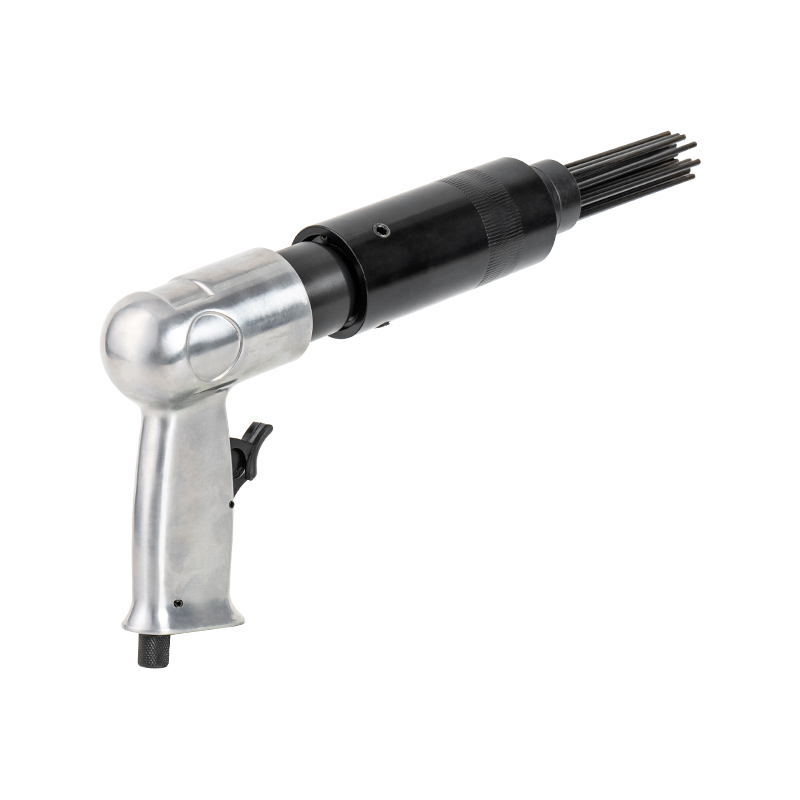 RH-464 Pneumatic Corner Needle ScalerFor inside corners, fillet welds, and recessed frames, the RH-464 corner scaler offers angled access with 3000 rpm and 19 needles.View Product →
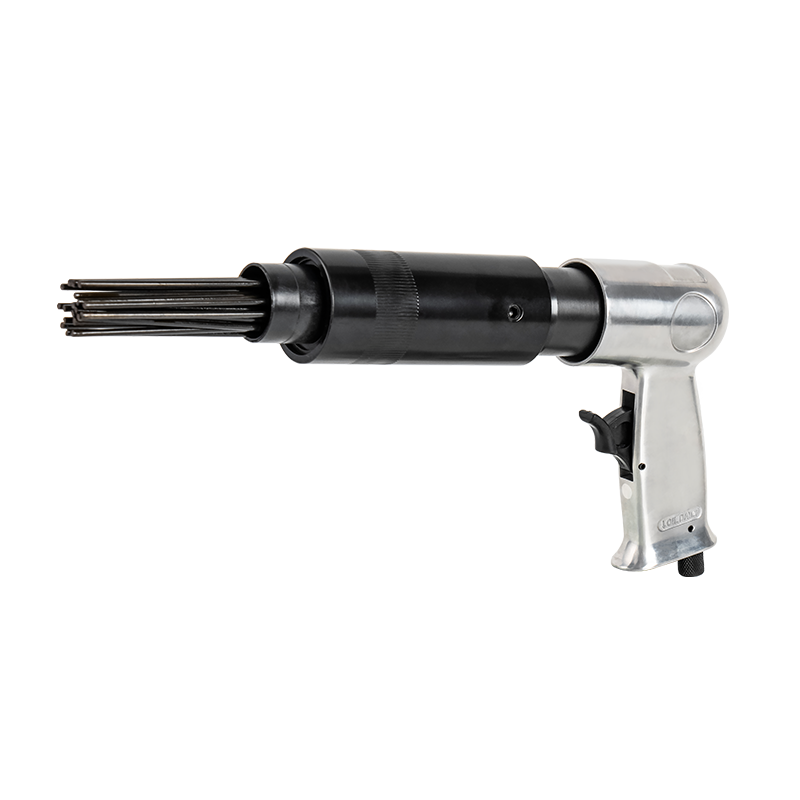
 RH-460 Mini Compact Pneumatic Needle ScalerA compact 4000 rpm scaler with 12 needles, suited to small repairs, automotive panels, and compact assemblies where full-size tools are clumsy.View Product →
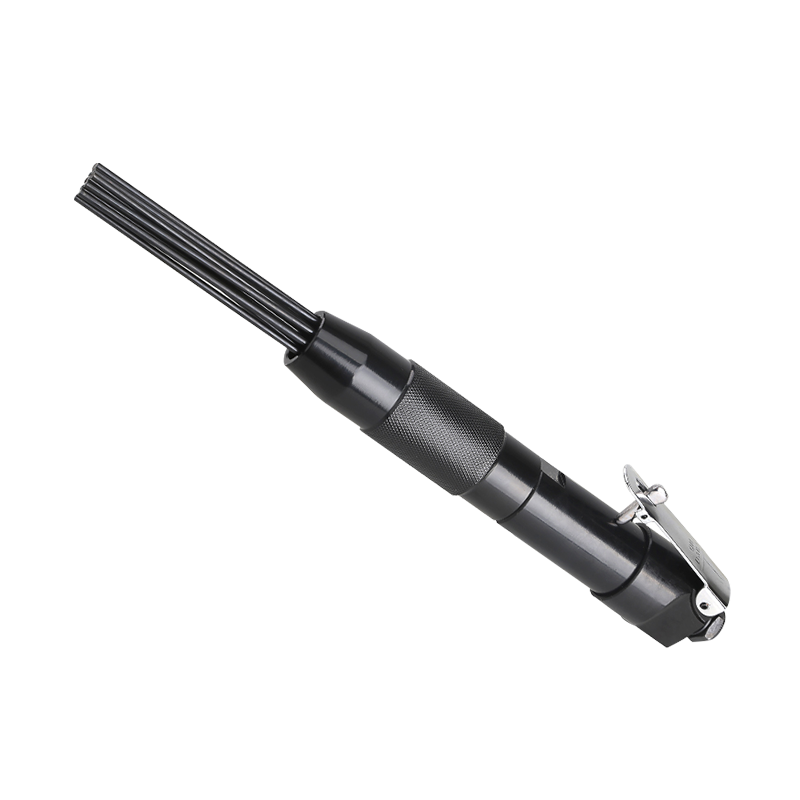
 RH-462 Portable Industrial Straight Needle ScalerA portable 4600 rpm straight scaler with 19 needles for general fabrication, tank work, and heavier surface cleaning, balancing reach and control.View Product →
Straight, Corner, or Compact: Matching the Tool to the Access
Configuration
Best for
Practical watch-outs
Straight needle scaler
Flat plate, H-beam webs, tanks, castings, concrete, general rust and scale removal
Needs clearance behind the tool; longer runs transmit more vibration to the operator
Corner needle scaler
Fillet welds, inside corners, frames, recessed areas, structural joints
Confirm the needle bundle reaches the corner; not intended for deep blind holes
Mini or compact scaler
Automotive repair, small weldments, tight assemblies, spot cleaning
Lower coverage per pass; air demand and needle length matter more on small tools
How It Compares with Grinders, Wire Brushes, and Blasting
Needle Choice, Air Supply, and Setup
Operating Steps and Safety Points
What to Check Before Buying
Recommended products
-
RH-464 Pneumatic Corner Needle Scaler
-
RH-460 Mini Compact Pneumatic Air Needle Scaler
-
RH-462 Portable Industrial Straight Needle Scaler
-
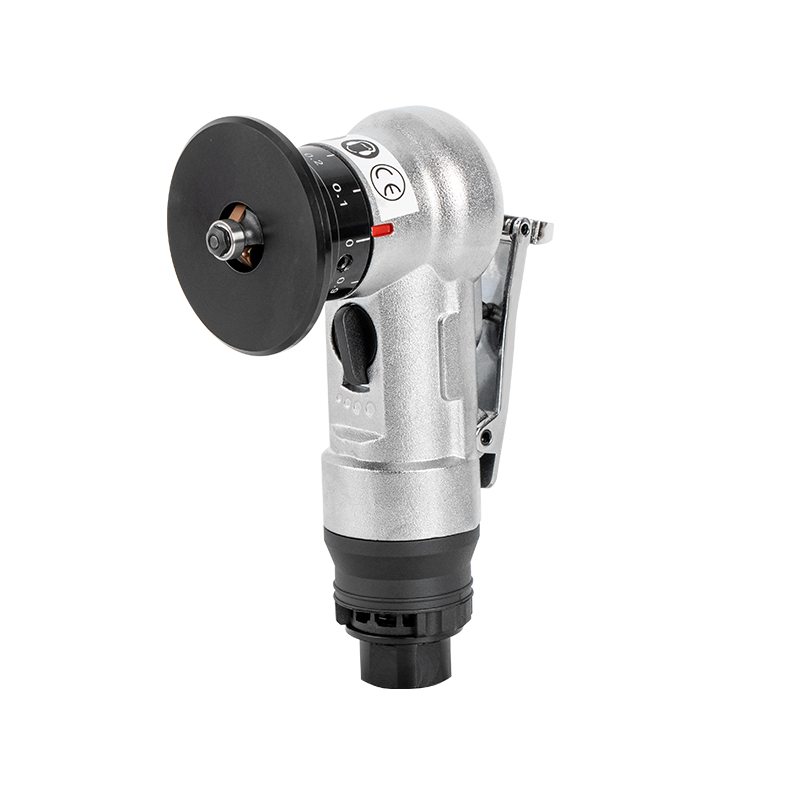
RH-7034C Portable Pneumatic Chamfering Machine
-
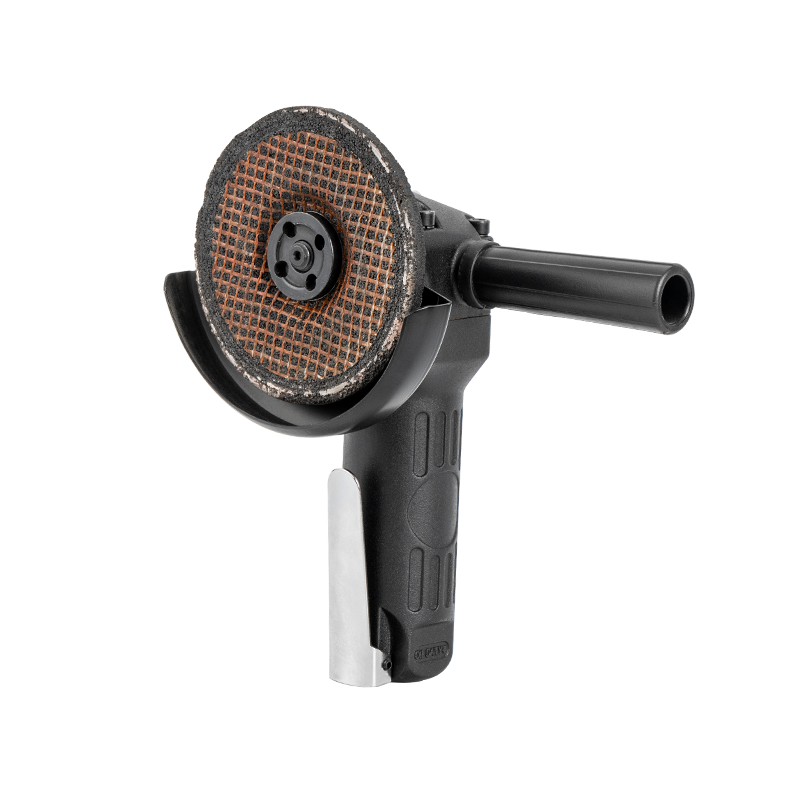
RH-7034B Central Pneumatic 4" Air Angle Grinder
-
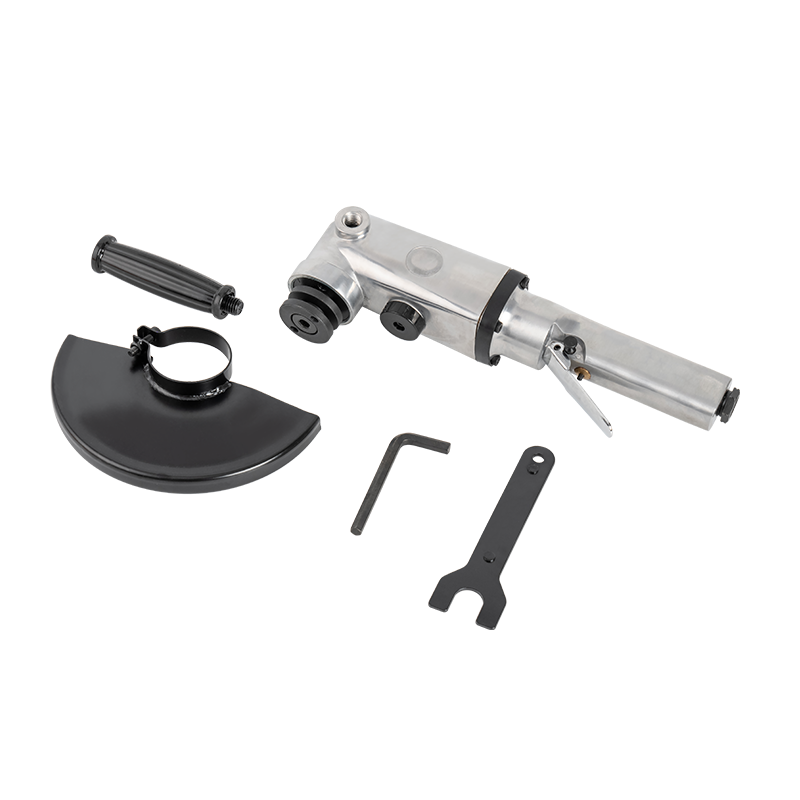
RH-7034D 7" Hand Held Angle Grinder
-
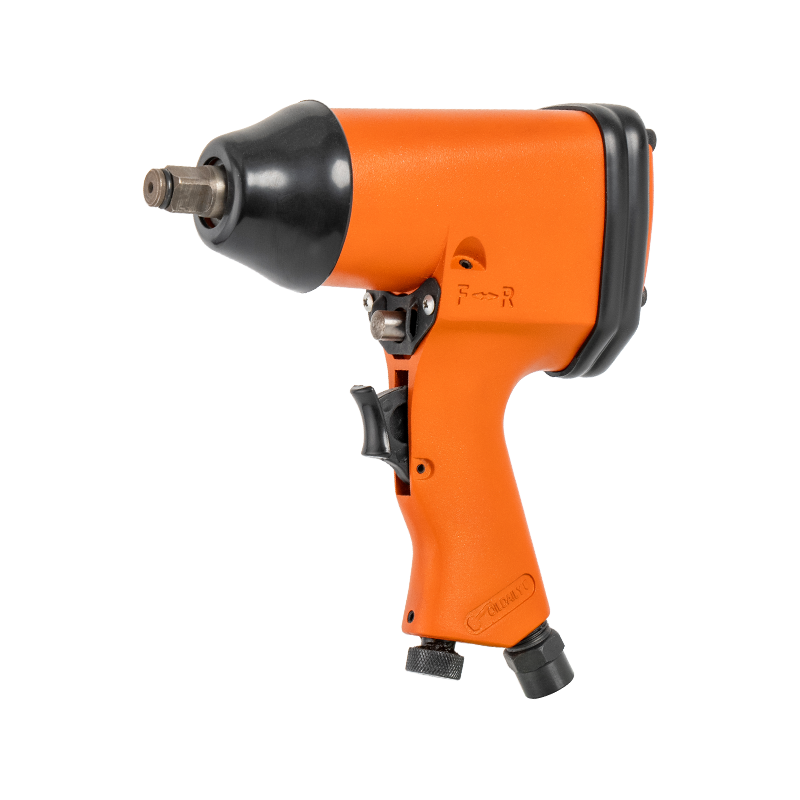
RH-160 1/2" Drive Single Hammer Air Pneumatic Impact Wrench
-
RH-160K Cordless Electric Rechargeable Air Impact Wrench Kit
-
RH-112 1/2" Universal Electric Ratchet Wrench Hand Tool
-
RH-128 1/2" High Torque Electric Ratchet Wrench
-
RH-138 3/8" Long Head Portable Cordless Electric Ratchet Wrench
-
RH-148 1/4" Electric Battery Ratchet Wrench
CONTACT OUR EXPERTS
AND GET A FREE CONSULTATION!
Ningbo Haishu Renhao Pneumatic Co., Ltd.
 Address: Jiangbei District Ningbo City in Zhejiang Province by the Keli industrial ParkL Building 15th
 Phone: +86-139 0668 0779
 Tel: +86-139 0668 0779
 Fax: +86-139 0668 0779
 E-mail:[email protected]


