The short answer to what does an air die grinder do is that it spins a small cutting, grinding, or polishing bit at very high speed, often between 20,000 and 25,000 revolutions per minute, allowing it to remove metal, deburr welds, shape castings, and polish tight or detailed surfaces that larger grinders simply cannot reach.
An Air Die Grinder, sometimes called a pneumatic die grinder, runs on compressed air rather than electricity, which gives it a lighter body, a smaller diameter head, and no risk of motor burnout under continuous heavy use. An electric die grinder trades some of that raw speed and compactness for the convenience of not needing a compressor, making it a practical choice for occasional users or mobile jobs without an air line nearby. The rest of this guide explains exactly how each type performs, where it excels, and how to pick the right one for your shop.
What Is an Air Die Grinder and How It Works
An air die grinder is a small handheld pneumatic tool built around a rotor and vane air motor. Compressed air enters the tool, spins an internal turbine, and that rotation is transferred directly to a collet at the tip of the tool, which holds interchangeable bits such as burrs, sanding drums, cutoff wheels, or polishing points.
Core Components
- Air inlet fitting that connects to a compressor hose
- Vane style rotor motor that converts air pressure into rotational speed
- Throttle lever or trigger to regulate airflow and speed
- Collet chuck that secures the grinding or cutting bit
- Exhaust port that vents spent air, often directed away from the work surface
Because the air motor has very few moving parts compared to an electric motor, it runs cooler under sustained load and tends to be significantly lighter for the same power output, which matters for tasks that require holding the tool steady for extended periods.
What Does an Air Die Grinder Do: Common Tasks and Applications
The high speed and compact head of an air die grinder make it suited to detail work that larger angle grinders cannot access. Below are the most common applications across metalworking, automotive, and fabrication shops.
Deburring and Weld Cleanup
After cutting or machining metal parts, sharp burrs and rough edges are common along the cut line. A die grinder fitted with a small rotary burr removes these edges quickly and precisely, without the risk of gouging the surrounding surface that a larger tool might cause.
Porting and Polishing Engine Components
In automotive performance work, technicians use die grinders to smooth and reshape intake and exhaust ports inside cylinder heads, a process known as porting. The narrow head and precise control of a die grinder allow access inside passages that would be impossible to reach with a standard grinder.
Rust and Coating Removal
Fitted with an abrasive flap wheel or sanding drum, a die grinder strips rust, paint, or old coatings from small or detailed metal surfaces where a larger sander cannot fit, such as inside wheel wells or around welded joints.
Mold and Die Shaping
Toolmakers use die grinders extensively when shaping and finishing injection molds and metal stamping dies, since fine detail control at high rotational speed allows precise material removal on complex three dimensional surfaces.
Cutting Small Metal Stock
Fitted with a small cutoff wheel, a die grinder can slice through thin metal rod, sheet, or tubing in tight spaces where a full sized cutoff saw or angle grinder would not fit.
Sculpting and Engraving Work
Beyond industrial metalwork, die grinders fitted with small diamond or carbide burrs are widely used in stone carving, wood sculpting, and metal engraving, since the high rotational speed combined with a very small bit diameter allows fine detail control that hand tools cannot match. Jewelry makers and hobbyist sculptors often favor lighter electric models for this type of work due to the precision needed during extended handheld sessions.
Removing Excess Weld Spatter
Weld spatter, the small droplets of molten metal that scatter around a weld joint during welding, hardens quickly and can interfere with paint adhesion or the fit of adjoining parts. A die grinder with a fine grinding stone clears this spatter efficiently without damaging the base metal surface the way a coarser tool might.
Preparing Surfaces for Coating or Bonding
Adhesives, paints, and protective coatings generally bond better to a slightly roughened surface than a perfectly smooth one, since microscopic texture gives the coating something to mechanically grip. A die grinder fitted with a wire brush or coarse abrasive point can create this texture precisely along edges, seams, or small repair areas without affecting the surrounding finished surface, which is especially useful in body repair work and small scale fabrication repairs.
Air Die Grinder Versus electric die grinder: Key Differences
Choosing between an air powered and an electric powered die grinder comes down to how the tool will be used, how often, and what infrastructure is already available in the shop.
Power and Speed
An air die grinder typically delivers higher sustained speed, often in the 20,000 to 25,000 RPM range, and maintains that speed consistently even under load, since compressed air supply does not drop off the way an electric motor can bog down under resistance. A comparable electric die grinder often runs in the 18,000 to 22,000 RPM range and may lose some speed when pressed hard into a workpiece.
Weight and Ergonomics
Because an air motor is smaller and lighter than an equivalent electric motor for the same power output, air die grinders are typically 20 to 30 percent lighter than a comparable corded or battery electric model, which matters significantly during long sessions of detail work where hand fatigue affects precision.
Setup and Infrastructure
An air die grinder requires an air compressor and hose, which is standard in most fabrication and automotive shops but is a real barrier for a hobbyist or mobile technician without existing compressed air infrastructure. An electric die grinder, whether corded or battery powered, needs only a power outlet or a charged battery, making it far more practical for one off jobs or work sites without compressed air.
Cost of Ownership
The tool itself is often similarly priced between air and electric versions at a comparable quality tier, but the total cost of ownership differs. An air die grinder requires an existing or newly purchased compressor, while an electric model has no such requirement but may need periodic battery replacement if cordless.
Noise and Vibration Exposure
Air die grinders tend to produce more exhaust noise due to the release of compressed air with every rotation, often requiring hearing protection during extended sessions. Electric die grinders run quieter overall, though some corded models introduce a higher pitched motor whine that certain operators find equally fatiguing over long periods. Vibration levels are broadly similar between well built tools of either type, though cheaper electric models sometimes transmit more vibration due to less refined motor balancing.
pneumatic die grinder Power and Speed Advantages
The term pneumatic die grinder refers to the same category of tool as an air die grinder, and the terms are used interchangeably across the industry. The core advantage of pneumatic power is torque consistency under load, since the air motor does not experience the voltage sag or thermal throttling that can affect an electric motor during extended continuous use.
Duty Cycle Performance
In production environments where a die grinder runs for hours at a stretch across a full shift, pneumatic models generally outperform electric alternatives because the air motor does not generate the same heat buildup that eventually forces an electric tool to slow down or shut off to protect its windings. This makes pneumatic die grinders the standard choice in high volume metal fabrication and foundry cleanup operations.
Compressor Sizing Considerations
A pneumatic die grinder typically requires a compressor capable of sustaining 4 to 6 cubic feet per minute of airflow at 90 PSI for continuous operation. Shops running multiple air tools simultaneously should size their compressor and air line diameter accordingly, since an undersized compressor will cause the die grinder to lose speed and torque exactly when it is needed most, during sustained material removal.
Torque at Variable Speed
One often overlooked advantage of pneumatic power is that torque remains relatively stable even as the operator throttles the tool down to a lower speed for delicate work. An electric motor, particularly a brushed type, can lose a disproportionate amount of torque at reduced speed settings, which makes fine control more difficult on detailed finishing passes. This is one reason experienced die grinder operators in tool and die shops tend to reach for a pneumatic model when precision matters as much as raw speed.
Air Versus Electric Die Grinder Comparison
| Factor |
Air Die Grinder |
Electric Die Grinder |
| Typical speed range |
20,000 to 25,000 RPM |
18,000 to 22,000 RPM |
| Weight |
Lighter for equivalent power |
Heavier due to motor and battery |
| Infrastructure needed |
Air compressor and hose |
Power outlet or charged battery |
| Sustained duty cycle |
Excellent, minimal heat buildup |
Good, may slow under prolonged heavy load |
| Best setting |
Production shops with existing air lines |
Mobile work, hobbyists, occasional use |
Comparison of air die grinders and electric die grinders across key performance factors
Choosing the Right Die Grinder for Your Job
The right choice depends less on brand or price and more on matching the tool to how and where it will actually be used.
Choose an Air Die Grinder If
- Your shop already has a compressor and air lines installed
- You need consistent high speed for hours of continuous production work
- Tool weight and fatigue over a full shift are a priority concern
- You work in metal fabrication, foundry cleanup, or automotive porting
Choose an Electric Die Grinder If
- You do not have access to a compressor or air lines
- You need to move between job sites without pneumatic infrastructure
- Your use is occasional rather than continuous production work
- You prefer a cordless option for maximum mobility around a project
Many established fabrication and automotive shops actually keep both types on hand, using the pneumatic version at fixed workstations tied into the shop air system and the electric version for mobile or offsite tasks where dragging an air hose is impractical.
Matching Bit Size and Collet to the Task
Beyond the choice between air and electric power, matching the correct collet size to the task at hand affects both results and safety. A quarter inch collet accepts larger, more durable bits suited to aggressive material removal, while an eighth inch collet is common on smaller, lighter die grinders used for fine detail work such as porting or engraving. Using a bit with a shank diameter smaller than the collet, even with an adapter sleeve, increases the risk of the bit wobbling or breaking under load, so matching bit shank size to the tool's rated collet size is worth checking before starting any job.
Angle and Straight Die Grinder Configurations
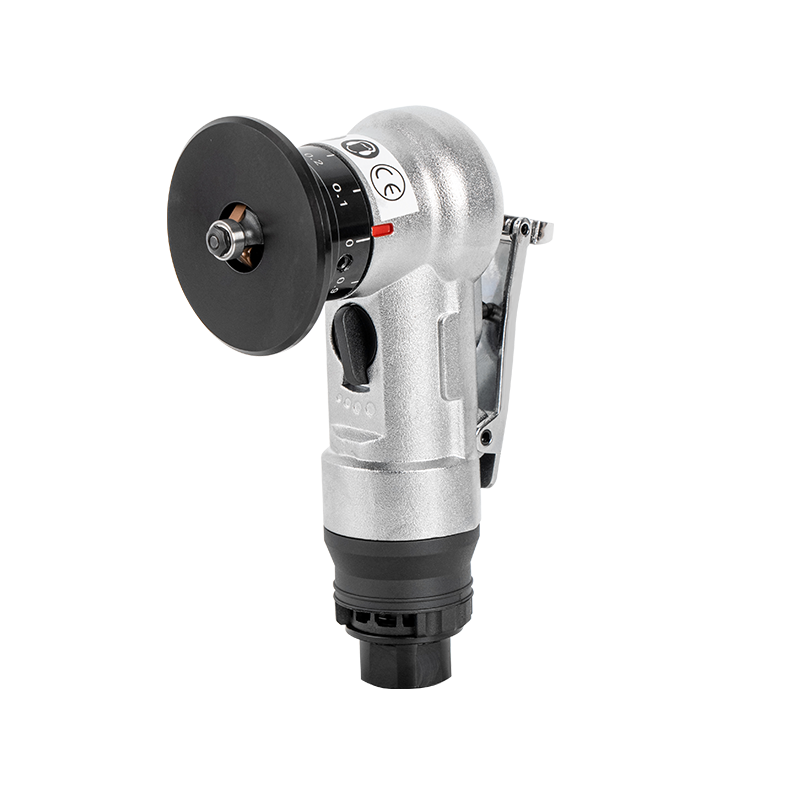
Both air and electric die grinders are available in straight and right angle configurations. A straight die grinder places the bit in line with the tool body, offering the best control for detailed surface work, while a right angle die grinder positions the bit perpendicular to the body, which is often easier to maneuver inside recessed or awkwardly angled spaces such as inside a wheel well or a narrow mold cavity. Some professional users keep one of each configuration on hand rather than trying to make a single tool handle every job.
Safety and Maintenance Tips for Die Grinders
Whether air or electric powered, a die grinder spins its bit fast enough to cause serious injury within a fraction of a second of contact, so proper handling and upkeep matter for both performance and safety.
Safety Practices
- Always wear eye protection, since high speed grinding throws fine metal particles at significant velocity
- Secure the workpiece firmly rather than holding small parts by hand while grinding
- Confirm the bit is rated for the tool's maximum RPM before installing it, since an underrated bit can shatter under high speed
- Disconnect the air supply or battery before changing bits or performing any adjustment
- Use a face shield in addition to eye protection when cutting or grinding brittle materials that can fragment
Maintenance Practices
Pneumatic die grinders benefit from a few drops of pneumatic tool oil added to the air inlet before each use, which lubricates the internal vane motor and significantly extends its service life. An inline air filter and moisture trap on the compressor line also protects the motor from water contamination that can cause internal corrosion over time.
Electric die grinders require less routine lubrication but benefit from regular inspection of the power cord or battery contacts for wear, along with periodic cleaning of ventilation slots to prevent dust buildup that can cause the motor to overheat during extended use.
With consistent maintenance, a quality air die grinder used in a professional shop setting can commonly remain in reliable service for several years of daily use, since the simple vane motor design has relatively few parts subject to wear compared to an electric motor with brushes and windings.
Storage Recommendations
Storing a die grinder properly between uses also contributes meaningfully to its lifespan. Air tools left connected to a pressurized line for extended idle periods can develop internal seal wear faster than tools that are disconnected when not in use. Electric models, particularly cordless versions, benefit from storage at a partial rather than full charge if they will sit unused for several weeks, since modern battery chemistries generally last longer when not stored at either extreme of their charge range. Keeping bits, collets, and wrenches organized in a dedicated case also reduces the chance of dropping or damaging small components that are easy to misplace in a busy shop environment.
Typical Price Range for Air and Electric Die Grinders
Budgeting for a die grinder purchase depends on power type, build quality, and whether the tool is intended for occasional home use or continuous professional service. The table below outlines general price expectations across common quality tiers.
| Tool Tier |
Air Die Grinder |
Electric Die Grinder |
| Entry level |
30 to 60 US dollars |
35 to 70 US dollars |
| Mid range professional |
80 to 180 US dollars |
90 to 200 US dollars |
| Industrial grade |
200 to 400 plus US dollars |
220 to 450 plus US dollars |
Approximate price ranges for air and electric die grinders by quality tier
These figures cover the tool alone. Buyers moving to a pneumatic setup for the first time should also budget for a compressor if one is not already available, along with an appropriately sized air hose and fittings, since these additional costs can meaningfully change the total investment compared to simply purchasing an electric model that plugs directly into an existing outlet.
Frequently Asked Questions
1. What does an air die grinder do that a standard angle grinder cannot?
An air die grinder reaches into tight spaces, ports, and detailed contours with a small diameter bit spinning at very high speed, allowing precise material removal that a larger angle grinder simply cannot access due to its size.
2. Is an Air Die Grinder more powerful than an electric die grinder?
Air die grinders typically maintain higher and more consistent speed under load compared to a similarly sized electric model, since compressed air power does not sag the way an electric motor can under sustained resistance.
3. Can a pneumatic die grinder be used without a compressor?
No, a pneumatic die grinder requires a connected air compressor and hose to operate, since it has no internal power source of its own and relies entirely on compressed air to spin its motor.
4. What size compressor do I need to run an air die grinder?
Most air die grinders need a compressor capable of sustaining roughly 4 to 6 cubic feet per minute of airflow at 90 PSI for continuous operation without losing speed.
5. Are electric die grinders good enough for automotive porting work?
Electric die grinders can handle porting work, particularly for occasional or hobbyist use, though professional shops doing this work regularly often prefer pneumatic models for their higher sustained speed and lighter weight during extended sessions.
6. What bits are compatible with a die grinder?
Die grinders commonly accept rotary burrs, sanding drums, cutoff wheels, and small grinding stones, typically fitted through a collet sized for either an eighth inch or quarter inch shank depending on the tool model.
7. How loud is an air die grinder compared to an electric one?
Air die grinders generally run louder than electric models due to the exhaust air release, which is why hearing protection is commonly recommended for extended pneumatic tool use in a shop environment.
8. Do I need to lubricate an air die grinder regularly?
Yes, adding a few drops of pneumatic tool oil to the air inlet before each use keeps the internal vane motor properly lubricated and significantly extends the tool's operating lifespan.
9. Can a die grinder cut through metal or is it only for grinding?
A die grinder can cut thin metal stock when fitted with a small diameter cutoff wheel, making it useful for precise cuts in tight spaces, though it is not intended for cutting thick or heavy gauge material.
10. Which is better for a beginner, an air die grinder or an electric die grinder?
An electric die grinder is usually more practical for a beginner without existing compressor infrastructure, since it requires no additional equipment purchase and still provides enough speed and control for most learning and hobbyist tasks.



 عربى
عربى 中文简体
中文简体 By Admin
 Address: Jiangbei District Ningbo City in Zhejiang Province by the Keli industrial ParkL Building 15th
 Phone: +86-139 0668 0779
 Tel: +86-139 0668 0779
 Fax: +86-139 0668 0779
 E-mail:[email protected]

