


 عربى
عربى 中文简体
中文简体Search by posts
Calendar
Product Categories
Industry News
 By Admin
A Pneumatic Drill Is Commonly Used When Electricity Is Unavailable: Types & Uses
A pneumatic drill is commonly used when electricity is unavailable. That is the straightforward answer most people encounter first, and it is still the fastest way to understand why air-powered drilling survives in an era of cordless batteries. Picture a bridge deck at 3 a.m., a mine shaft with no legal place to run a live extension cord, a shipyard compartment that is wet and conductive, or a refinery turnaround where a spark from a brushed motor is unacceptable. In each case, the drill is not chosen because it is fashionable. It is chosen because compressed air is already present, the job cannot wait for a charged battery, and the risk of bringing electricity into the area is higher than the inconvenience of dragging an air hose. That answer, however, is only the first layer. A pneumatic drill is also commonly used when the work is repetitive, when the tool must run for hours without overheating, when the operator needs a high power-to-weight ratio, or when the surrounding environment is wet, dusty, hot, or potentially explosive. The tool is not limited to emergency use. In many factories, maintenance departments, and construction sites, the pneumatic drill is the default rather than the fallback. The practical conclusion is simple: the presence or absence of electricity is the first filter, but it is not the only one. Compressed air availability, duty cycle, torque demand, chuck size, bit type, hose pressure, and safety classification usually decide the final choice. This article explains those factors in the order a buyer or maintenance planner actually meets them. A pneumatic drill is a handheld or fixture-mounted rotary tool driven by compressed air. Air enters through a hose and fitting, passes through a trigger valve, and spins an air motor. The motor turns a chuck or spindle, which holds a drill bit, reamer, countersink, or similar cutting accessory. The tool may look like a familiar electric drill, but its internal logic is different. There is no armature, no field winding, no battery, and no electronic speed controller in the basic form. Power comes from the compressed air supply, and speed is controlled by air volume and pressure. The term is sometimes confused with a rock drill or jackhammer. In construction English, a pneumatic drill can mean a heavy pavement-breaking tool that pounds rather than rotates. In industrial tool catalogs, however, a pneumatic drill usually means a rotary drilling tool with a chuck. This article uses the rotary meaning, because that is the tool most commonly selected for drilling metal, wood, composites, and thin-wall structures in maintenance and production work. A pneumatic drill is not the same as a pneumatic die grinder, although both use air motors. A die grinder is designed for abrasive burrs and mounted points at high speed. A drill is designed for axial cutting with a bit, so it needs a chuck, a spindle bearing arrangement, and often a lower speed with higher torque. The distinction matters when buying: a high-speed die grinder can burn a drill bit, while a low-speed drill may not reach the surface speed needed for small-diameter bits in soft material. The tool may also be a pistol-grip drill, a straight drill, a right-angle drill, or a close-quarter drill. The air motor is the common platform. The housing, gearing, exhaust direction, and handle shape change to fit the work area. This modular logic is why one manufacturer may offer several models with the same basic motor but different chucks, gear ratios, and head angles. Compressed air enters the tool at a pressure normally regulated between 90 psi and 100 psi in many industrial settings, although the exact value depends on the tool and the manufacturer’s rating. The air passes through a filter, regulator, and lubricator if the site uses a proper air preparation unit. Inside the drill, the air pushes against vanes set in a rotor. The rotor spins inside a cylinder, and the rotating force is transmitted to a planetary gear set or directly to the spindle, depending on the model. The exhaust then leaves the tool. Front exhaust blows air forward, away from the operator, which can help clear chips but may also blow dust into the work area. Rear exhaust directs air backward, often reducing noise at the workpiece and improving operator comfort. Some tools include a silencer or muffler to reduce the sharp exhaust note. The exhaust design is not a minor detail. In confined spaces, it affects noise exposure, chip control, and whether the operator can hear warning signals. Speed control is usually achieved by how far the trigger is pressed. A feathering trigger lets the operator start slowly, center the bit, and then increase speed. More advanced drills may have a built-in regulator or a separate air flow control valve. The operator can also adjust the supply pressure at the regulator, but this should be done with the tool’s rated pressure in mind. Running a drill above its rated pressure increases speed and power briefly, but it also accelerates wear on the motor, gears, and bearings. Running it below rated pressure reduces torque and can cause the bit to stall and rub instead of cut. The relationship between air pressure, air volume, and torque is one reason why pneumatic drills remain efficient under load. An air motor can be designed to stall without burning out in the same way an electric motor can. When the bit binds, the air motor slows or stops, and the operator can release the trigger. The tool may heat up from friction, but it does not usually suffer the immediate winding failure that can happen when a brushed electric motor is stalled under full voltage. This stall-tolerant behavior is valuable in maintenance work where the operator cannot always see the back side of a hole or predict when a bit will break through. It is also useful when drilling into mixed materials, such as a steel plate with a weld seam or a composite panel with embedded fasteners. The operator can feel the cut through the tool and react before the bit snaps. Pneumatic drills are not a single product. The common categories are based on shape, speed, torque, and chuck size. A buyer who understands these categories can narrow a catalog quickly and avoid the mistake of choosing a tool that is technically air-powered but wrong for the job. The pistol-grip pneumatic drill is the most familiar shape. It is held like a handgun, with the trigger under the index finger and the chuck at the front. These drills are commonly used for general maintenance, sheet metal work, vehicle repair, and assembly. They are easy to carry and can be used in horizontal, vertical, and overhead positions, although overhead work is tiring because the operator must support the tool and the air hose. Typical drill-gun models include 3/8-inch and 1/2-inch chuck versions. A 3/8-inch drill is often enough for small holes in steel, aluminum, and plastics. A 1/2-inch drill provides more torque and accepts larger bits, but it also demands more air volume and a more secure workpiece. Some models are single-turn, meaning they rotate in one direction only. Others have forward and reverse, which is useful for tapping, backing out stuck bits, and working with self-drilling fasteners. Single-turn drills are simple and durable. They have fewer internal parts and fewer places for chips or moisture to cause trouble. In a production cell where the tool only needs to drill and never reverse, a single-turn model can be the most reliable choice. The operator cannot accidentally reverse the spindle and damage a tap or a specialty bit. Forward and reverse models add flexibility. They are commonly used in maintenance shops where one tool must handle drilling, hole sawing, and occasional fastener removal. The reverse function also helps when a bit jams in deep holes. Instead of forcing the bit forward, the operator can reverse it out slowly while applying air pressure in short bursts. Straight pneumatic drills have the chuck in line with the motor body. They look like a long cylinder and are often used in confined spaces, under panels, inside cabinets, and along structures where a pistol grip would not fit. A straight drill can also be mounted in a fixture or used with a drill stand for repeated holes. The operator holds the body close to the work and applies feed pressure along the tool axis. Right-angle drills are the problem solvers. The chuck turns 90 degrees to the body, so the operator can drill in a corner, against a wall, or between two surfaces that are too close for a standard drill. Right-angle models are common in automotive repair, aircraft assembly, rail maintenance, and industrial equipment installation. Some are designed as low-speed, high-torque tools for hole saws and large bits. Others are compact close-quarter tools for small holes in tight spaces. Right-angle drilling changes the reaction force. The tool tries to twist sideways rather than push straight back. The operator must use a secure grip and sometimes a secondary handle or fixture. If the bit catches, the tool can rotate suddenly. This is a strong argument for using the correct tool size and for keeping the workpiece clamped. Low-speed pneumatic drills are chosen for large bits, hole saws, reamers, and hard materials. They trade spindle speed for torque. High-speed models are chosen for small bits, soft materials, and fast cycle times. The correct speed depends on the bit material, the workpiece material, and the diameter. A small carbide bit in aluminum may need high speed and light feed. A large hole saw in steel needs low speed, steady pressure, and cutting fluid. The purchase risk is choosing by shape alone. A compact pistol-grip drill may look convenient, but if it cannot deliver the torque needed for a 1-inch hole saw, it will stall repeatedly. The operator will then push harder, which increases heat and the chance of bit breakage. The better approach is to start with the largest bit and the hardest material, then select the tool that can turn that bit at the correct speed without exceeding the air supply. The phrase “commonly used” hides a wide range of workplaces. The following list is not theoretical. These are environments where air drills appear because the site conditions, production rhythm, or safety rules favor them. On bridges, tunnels, dams, and high-rise sites, electricity may be unavailable at the exact work face. Temporary power may be routed to lighting and hoists, but not to every drilling location. A pneumatic drill can run from a portable compressor or from an existing air line. It is used for installing guardrails, drilling anchor holes, fastening formwork, and repairing steel structures. In winter or wet weather, the absence of a live cord is a practical safety advantage. Underground mining and tunneling operations often have compressed air distribution for ventilation equipment, rock drills, and other machinery. A pneumatic drill can be connected to that network. The environment may contain dust, water, and potentially combustible gases. Electric tools require special enclosures and permits in such areas. Air tools avoid many of those ignition risks because they do not produce sparks from brushes or switching contacts in normal operation. Shipyards are wet, salty, and full of steel. A pneumatic drill is commonly used for hull repair, deck fitting, pipe flange work, and engine room maintenance. The tool can be dropped in bilge water, rinsed, and lubricated without the immediate electrical failure that would ruin a corded drill. The air hose may be heavy, but the tool itself is often lighter than an equivalent electric model. Refineries and chemical plants classify areas by explosion risk. In a hazardous zone, a standard electric drill may not be allowed unless it is rated and approved for the atmosphere. A pneumatic drill does not have an electric motor, so it is often the simpler choice for maintenance drilling. It is used on flange bolts, heat exchanger covers, pipe supports, and structural repairs during turnarounds. Heat, scale, and abrasive dust destroy electric tools quickly. A pneumatic drill can operate near furnaces and casting lines where the ambient temperature is high. The air exhaust also helps cool the motor internally. In heavy fabrication, these drills are used to open holes in beams, plates, and weldments before bolting or riveting. Rail maintenance crews use pneumatic drills for track components, signal equipment, and rolling stock repair. Aerospace assembly uses compact right-angle and straight drills for thousands of holes in aluminum and composite structures. Automotive and truck repair shops use air drills for body panels, exhaust work, and engine accessory installation. In these settings, the tool is often part of a larger air system that includes impact wrenches, ratchets, and grinders. A pneumatic drill is commonly used in wet pits, tanks, silos, and tunnels. The operator may be standing in water or working in a space where a cord would be a tripping and shock hazard. Because the drill is powered by air, the only electrical risk is usually at the compressor or lighting, which can be placed outside the confined space. The air hose itself is not an electrical conductor, although static electricity can build up in some dry conditions and should be managed with proper grounding and hose selection. In factories, pneumatic drills are used on assembly lines because they can run continuously with minimal downtime. A cordless drill needs battery changes. A corded drill may overheat. An air drill can run as long as the compressor keeps up and the tool receives lubrication. This makes it suitable for drilling repeated holes in furniture, appliances, metal cabinets, and automotive components. The common answer—no electricity—covers three different situations. The first is true absence. There is no outlet, no generator, and no charged battery. The second is unsafe presence. Electricity is available, but using it in the work area creates a shock, spark, or fire risk. The third is impractical presence. Electricity is available, but running a cord, setting up a generator, or managing batteries would slow the job more than running an air hose. In the first case, a pneumatic drill is commonly used on remote sites, in temporary camps, and during emergency repairs. A compressor may already be on site for other tools or equipment. The drill connects to that supply and works immediately. There is no waiting for a battery to charge and no need to size a generator for the drill’s starting current. In the second case, the decision is driven by safety rules. Wet basements, ship holds, chemical washdown areas, and explosive atmospheres all restrict electrical equipment. A pneumatic drill avoids the electric motor and the cord. It still requires safe air pressure and hose management, but the electrical hazard is removed from the immediate work point. In the third case, the decision is driven by workflow. A production line may have power everywhere, but the tool is mounted on a fixture or used in a cell where a cord would snag. An air hose can be routed overhead with a balancer or drop, keeping the floor clear. The drill can be used, released, and picked up again without plugging and unplugging. In high-volume work, those seconds matter. The practical buyer should ask a simple question: is the problem electricity, or is it power delivery? A battery drill solves some absence problems, but it adds weight, charge time, and eventual cell replacement. A corded drill solves steady power problems, but it adds cord management and shock risk. A pneumatic drill solves both by moving the power source to a compressor and the energy carrier to air. The trade-off is that the site must have compressed air. Pneumatic drills are not automatically better than electric drills. They are better in specific conditions. The advantages below are the ones that matter most in purchasing and maintenance decisions. An air motor can produce a lot of torque for its size. The tool does not need a heavy battery, copper windings, or a large transformer. This is why pneumatic drills are often lighter than cordless drills with comparable power. Less weight means less fatigue during overhead or vertical drilling. In aerospace and automotive assembly, reduced operator fatigue translates into better hole quality and fewer injuries. A pneumatic drill can run all shift as long as the air supply holds. There is no battery to swap, no charge cycle, and no memory effect. In a factory, this improves predictability. The tool is always ready. The maintenance team only needs to monitor air pressure, lubrication, and hose condition. Air motors can stall without the immediate electrical failure that affects many electric motors. When a drill bit binds, the tool slows or stops. The operator can release the trigger, reverse the tool if equipped, and clear the obstruction. This behavior reduces repair costs and downtime, especially when operators are drilling into unknown materials or hard spots. Water does not short an air motor. Dust does not burn out a commutator. Heat does not melt a battery pack. A pneumatic drill can operate in shipyards, foundries, mines, and food processing washdown areas where electric tools need special protection. It still needs clean, lubricated air, but the tool itself is more tolerant of the environment. Because there is no electric motor, a pneumatic drill avoids brush arcing and switching sparks. This does not make every air drill intrinsically safe. Static electricity, hot surfaces, and impact sparks from the bit or workpiece can still be ignition sources. However, the tool’s power section is not an electrical ignition risk. In classified areas, that simplification can reduce permitting and equipment complexity. An air drill has fewer electrical parts to fail. The main wear items are vanes, bearings, gears, seals, and the chuck. These can often be replaced in-house or by a repair shop. The initial cost may be similar to an electric drill, but the life cycle cost can be lower when the tool runs thousands of cycles per year. The compressor and air treatment system are shared costs, so the incremental cost of adding another air tool may be small. A balanced view is necessary before specifying a pneumatic drill. The tool has real limitations, and ignoring them leads to poor performance and wasted money. Without a compressor and air line, the drill cannot run. The air supply must deliver enough volume, not just pressure. A small compressor may show 90 psi on a gauge, but when the drill trigger is pressed, the pressure may drop because the compressor cannot keep up with the flow. The result is a drill that stalls, runs slow, or cannot maintain the required speed. Buyers must check the CFM or l/min rating of the drill against the compressor output and the other tools running at the same time. An air hose is heavier and less flexible than a cord. It can snag on scaffolding, run through water, or create a trip hazard. In shops, overhead hose balancers and drop lines solve this. On remote sites, the hose becomes part of the work plan. The operator must route it safely and protect it from sharp edges, hot surfaces, and vehicle traffic. Air motors and exhaust can be loud. The noise level depends on the tool, the pressure, the exhaust design, and whether a silencer is fitted. Vibration also matters during prolonged drilling. Operators should use hearing protection and anti-vibration gloves where needed. The tool should be maintained so that worn bearings and unbalanced chucks do not increase vibration. Most pneumatic drills need clean, dry, lubricated air. Water in the air line washes away lubricant and causes rust. Dirt wears the motor vanes. A proper air preparation unit—filter, regulator, and lubricator—protects the tool and keeps performance consistent. In food or medical applications, special lubricants and non-oil air may be required, which can change the tool selection. A pneumatic drill can generate high torque. If the bit catches, the tool may twist the operator’s wrist or spin the workpiece. Right-angle drills are especially prone to sudden reaction because the handle is offset. The solution is to use sharp bits, correct speed, secure clamping, and a firm two-hand grip where possible. For large holes, a drill stand or fixture is safer than hand-held drilling. The most common purchase risk is not the drill itself. It is an undersized compressor, a long undersized hose, or a restricted quick coupler. These problems create pressure drop at the tool. The operator feels that the drill is weak and may blame the tool. In reality, the air system is starving it. Before buying, measure pressure at the tool inlet while the drill is running. If the pressure drops more than the manufacturer allows, fix the supply before changing the tool. Selection starts with the hole. The hole diameter, material, depth, and required finish determine the speed and torque. The tool shape is chosen after that, not before. After the site condition, check four numbers. First, chuck size. A 3/8-inch chuck covers most small and medium drilling. A 1/2-inch chuck gives more bit shank capacity and torque. Second, free speed. This is the no-load spindle speed. It must match the bit and material. Third, torque or power output. This determines whether the drill can turn the bit without stalling. Fourth, air consumption. This tells you whether the compressor and hose can feed the tool. Do not assume that a higher free speed means a better drill. A high-speed drill with low torque will struggle with large bits. A low-speed drill with high torque may be too slow for small holes. The right balance depends on the work. For example, a 1/4-inch bit in aluminum may run best at high speed and light feed. A 1-inch hole saw in steel needs low speed, high torque, and cutting fluid. Chuck type also matters. Keyed chucks grip firmly and are common on industrial drills. Keyless chucks are faster for bit changes but may slip under heavy load. A threaded spindle or quick-change system may be used for specialty bits. The operator should match the chuck to the bit shank and the expected torque. If the chuck slips, the bit shank will be damaged and the hole will be inaccurate. For a broader view of available models, the pneumatic drill range can be grouped by chuck size, handle style, and speed. This helps buyers compare like with like instead of mixing drill guns, straight drills, and right-angle tools in one specification. A pneumatic drill is only as good as the air behind it. The site readiness check should happen before the tool is ordered. The compressor must deliver enough flow at the required pressure. The receiver tank should be large enough to absorb demand spikes. The dryer and filter should remove water and particles. The regulator should be set to the tool’s rated pressure. The lubricator should deliver the correct oil rate for the tool. Hose size is a common failure point. A 1/4-inch hose may be fine for a short run and a small drill. A 1/2-inch drill or a long hose run may need a larger diameter to avoid pressure drop. Quick couplers can also restrict flow if they are undersized or worn. The best way to verify is to install a pressure gauge at the tool inlet and observe it while the drill is running. If the pressure falls significantly below the static reading, the supply is restricted. Water is the enemy of air motors. Compressed air holds moisture, and as it expands through the tool, it cools and can condense. Water washes away lubricant, causes rust, and can cause vanes to stick. An inline filter or coalescing dryer helps. In humid climates, a refrigerated dryer may be necessary. The operator should drain the compressor tank and air lines regularly. Lubrication should be matched to the tool. Too little oil causes wear. Too much oil can contaminate the work area and attract dust. Manufacturers specify the oil type and rate. In food, pharmaceutical, or cleanroom work, non-oil or food-grade lubricants may be required. The air preparation unit should be placed close enough to the tool to be effective but not so close that it interferes with movement. Pressure regulation is not optional. Running a drill above its rated pressure may increase speed for a short time, but it also increases vibration, noise, and wear. It can also cause the bit to overheat. Running below rated pressure reduces power and can cause the bit to rub. Set the regulator correctly and lock it. If multiple tools share the same line, use individual regulators or a properly sized distribution system. Pneumatic drills are used in industrial environments, so safety rules matter. The exact regulations depend on the country and industry, but the principles are consistent. The tool should be used only with guards and handles supplied by the manufacturer. Bits should be sharp and correct for the material. The workpiece should be clamped or secured. The operator should wear eye protection, hearing protection, and suitable gloves. Vibration exposure should be managed. Prolonged use of any vibrating tool can cause hand-arm vibration syndrome. Keep the tool maintained, use sharp bits, let the tool do the work, and take breaks. Anti-vibration gloves can help, but they do not replace proper tool selection and work rotation. If the drill is used all day, the site should measure or estimate vibration exposure and compare it with local limits. Noise is another exposure. Air exhaust can be loud, especially in confined spaces. Silencers and rear exhaust help, but hearing protection is still required in many cases. The operator should also consider the noise impact on nearby workers. In a shipyard or tunnel, the sound can reflect and increase the total dose. Hose safety is often overlooked. A pressurized air hose can whip if a fitting fails. Use safety cables or clips on large hoses. Inspect fittings and couplers regularly. Never use compressed air to clean clothing or skin. The pressure can force air into the body and cause serious injury. For cleaning, reduce pressure to a safe level and use approved nozzles and PPE. For explosive atmospheres, the site’s classification rules govern. A pneumatic drill removes the electric motor, but it does not automatically make the operation safe. Impact sparks, static discharge, hot surfaces, and incompatible materials must still be controlled. The tool should be part of a documented risk assessment, not a shortcut around one. A pneumatic drill is a mechanical tool, and it responds well to simple maintenance. The most common service items are air motor vanes, bearings, gears, seals, and the chuck. The service interval depends on use, air quality, and lubrication. In a clean, lubricated shop, a drill can run for a long time with only periodic oiling. In a dirty, wet site, it may need more frequent inspection. Daily maintenance usually means checking the air line for water and debris, adding oil if the tool is not connected to an automatic lubricator, and inspecting the chuck for wear. Weekly or monthly maintenance may include checking the trigger valve, exhaust ports, and hose fittings. If the drill loses power, the cause may be worn vanes, a clogged muffler, a restricted hose, or a failing compressor. The tool should be tested with a known-good air supply before it is repaired. The life-cycle cost of a pneumatic drill includes the tool, the air supply, the hose, the fittings, the lubricant, and the maintenance labor. The compressor and air treatment system are shared across many tools, so the drill’s share may be small. However, if the site does not already have a suitable air system, the initial cost can be high. In that case, a corded or cordless electric drill may be more economical unless the safety or environmental conditions require air power. For high-use shops, the economics often favor air. The tool is simple, repairable, and tolerant of overload. The operator does not wait for batteries. The maintenance team can stock common parts and rebuild tools in-house. The air system, once installed, supports many other tools such as impact wrenches, ratchets, grinders, and needle scalers. That shared infrastructure is a major reason pneumatic drills remain common in industrial settings. Before ordering a pneumatic drill, work through a checklist that connects the job to the tool and the tool to the air supply. This prevents the most common mistakes. Two additional checks are useful. First, ask for the tool’s actual air consumption at the working pressure, not just a catalog headline. Second, test the tool on the site air supply before committing to a large order. A five-minute trial with a pressure gauge at the inlet reveals more than a specification sheet. If the pressure holds and the drill cuts without stalling, the match is probably correct. The buyer should also consider the total number of tools in use. If several operators drill at the same time, the compressor must support the combined flow. A receiver tank and a properly sized distribution loop help. If the air system is marginal, the shop may need to upgrade the compressor before adding more pneumatic drills. Example one: a maintenance crew is repairing a steel pedestrian bridge. The work is 200 meters from the nearest outlet. A generator would be noisy and would require fuel. A battery drill may not have enough charge for two dozen 1/2-inch holes in steel. The crew already has a tow-behind compressor for a pneumatic chipping hammer. They connect a 1/2-inch pneumatic drill, regulate the pressure, and drill the holes without waiting. The common answer applies: electricity is unavailable, and the air supply is already there. Example two: a shipyard worker is inside a ballast tank. The surfaces are wet and the space is confined. An electric drill would require a cord, a GFCI, and careful inspection. The pneumatic drill connects to an air line dropped into the tank. The exhaust is directed away from the operator. The tool is rinsed and oiled after use. The decision is driven by safety and environment, not just the absence of power. Example three: an assembly plant drills 800 holes per shift in aluminum frames. A cordless drill would need multiple battery changes. A corded drill would be tethered and could overheat. A pneumatic drill runs from an overhead drop with a balancer. The operator triggers the tool, drills, and releases it. The cycle is fast and consistent. The compressor and air dryer are central utilities, so the incremental cost of the drill is low. Example four: an automotive repair shop has power and battery tools. A technician needs to drill a hole in a tight engine bay corner. A right-angle pneumatic drill fits where a pistol-grip electric drill cannot. The shop already has air for impact wrenches. The pneumatic tool solves an access problem that electricity cannot solve. This is a case where the drill is commonly used not because electricity is missing, but because the shape and size are better. A pneumatic drill is commonly used when electricity is unavailable, but that phrase should not be treated as the whole story. The tool is also used when electricity is unsafe, when batteries cannot keep up, when the environment is wet or hot, when the tool must run for a full shift, and when the work area is too tight for a corded or cordless drill. The presence of compressed air is the enabling condition. The absence of electricity is often the trigger. For buyers, the sequence is straightforward. Start with the hole and the material. Determine the speed and torque. Choose the shape and chuck. Check the air supply and pressure drop. Confirm safety and maintenance support. If the site has compressed air and the job fits the tool’s strengths, a pneumatic drill can be the most reliable choice. If the site has no air and the environment is clean and powered, an electric drill may be more practical. The common answer is useful, but the best answer comes from matching the tool to the actual work.The Short Answer: When No Power Outlet Is Within Reach
What Counts as a Pneumatic Drill
How a Pneumatic Drill Works
Types of Pneumatic Drills and Where Each Is Commonly Used
Pistol-Grip and Drill-Gun Models
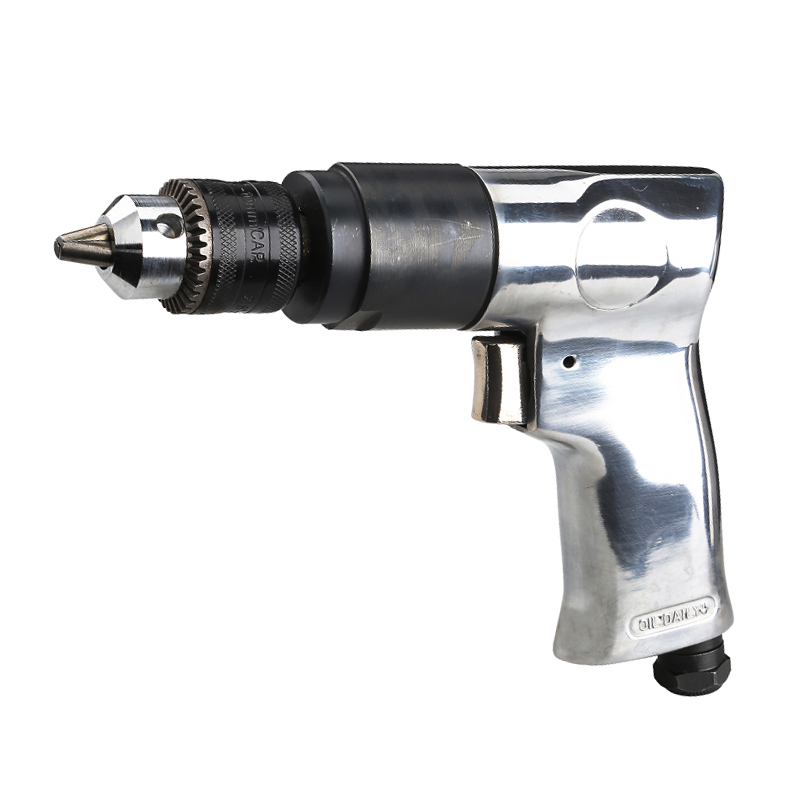 RH-330 3/8-Inch Single-Turn Pneumatic DrillA simple single-turn air drill for small, precise holes; suits production drilling where reverse is unnecessary and reliability matters.View Product →
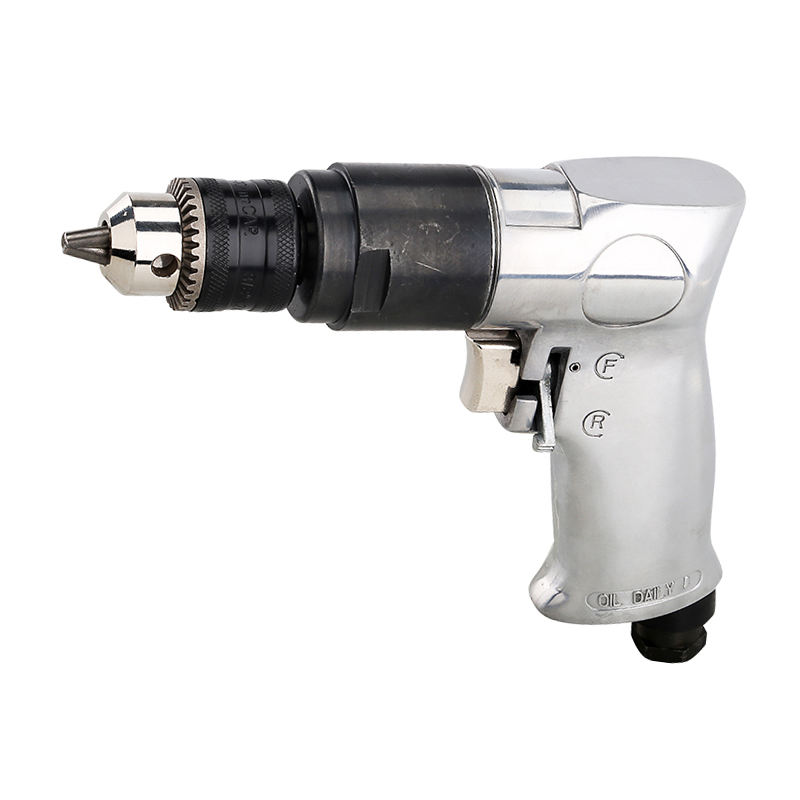 RH-332 3/8-Inch Forward/Reverse Pneumatic DrillAdds forward and reverse rotation to pneumatic drilling, useful for maintenance work, jammed bits, and applications needing controlled circulation or bottom-hole cleaning.View Product →
Straight and Right-Angle Drills
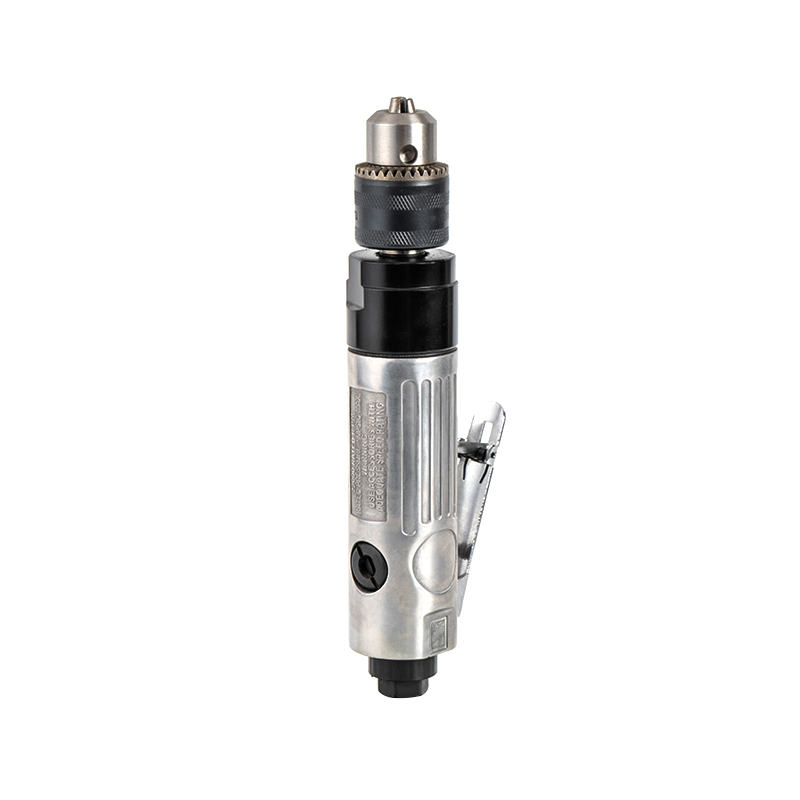 RH-3302 High-Torque Right-Angle Pneumatic DrillA right-angle air drill for narrow or angled work; high torque and secure handling suit maintenance, aerospace, automotive, and construction tasks.View Product →
Low-Speed, High-Torque and High-Speed Models
Where a Pneumatic Drill Is Commonly Used
Construction and Infrastructure
Mining and Tunneling
Shipyards and Marine Maintenance
Oil, Gas, and Chemical Plants
Foundries, Steel Mills, and Heavy Fabrication
Rail, Aerospace, and Vehicle Repair
Wet, Dusty, and Confined Spaces
High-Cycle Production and Assembly
When Electricity Is Unavailable, Unsafe, or Simply Impractical
Advantages That Keep Pneumatic Drills in the Tool Crib
High Power-to-Weight Ratio
Continuous Duty Without Battery Changes
Stall Tolerance and Overload Behavior
Wet and Harsh Environment Operation
Safety in Hazardous Atmospheres
Lower Long-Term Cost in High-Use Shops
Limits, Drawbacks, and Purchase Risks
Dependence on Compressed Air
Hose Management and Trip Hazards
Noise and Vibration
Air Quality and Lubrication
Torque Reaction and Bit Binding
Hidden Cost of Poor Air Supply
Matching the Drill to the Job: Torque, Speed, Chuck, and Air
Site condition
Electric drill considerations
Pneumatic drill considerations
Practical decision
No grid power or dead batteries
Requires generator or charged batteries
Runs from existing compressor or portable air supply
Pneumatic drill is commonly used when electricity is unavailable.
Wet or conductive area
Shock risk, GFCI required, cords must be protected
No electric motor at the work point; air hose is not a conductor
Pneumatic often preferred if air is available.
Explosive or flammable atmosphere
Special rated motors and permits may be required
Avoids brush arcing and switching sparks; static control still needed
Pneumatic can simplify approval, but site rules govern.
High-duty production
Battery changes or motor heating limit uptime
Runs continuously while air supply holds
Pneumatic for repetitive cycles and line production.
Remote emergency repair
May need generator, fuel, or battery logistics
Uses compressor already on truck or site
Pneumatic if the compressor can deliver required flow.
Tight corner or confined space
Cord and body size may restrict access
Right-angle and straight models fit close quarters
Choose shape first, then verify air consumption.
Air Supply and Site Readiness
Safety, Standards, and Operator Protection
Maintenance and Life-Cycle Cost
Procurement Checklist for Buyers
Practical Examples That Show the Decision in Action
Final Practical Takeaway
Recommended products
-
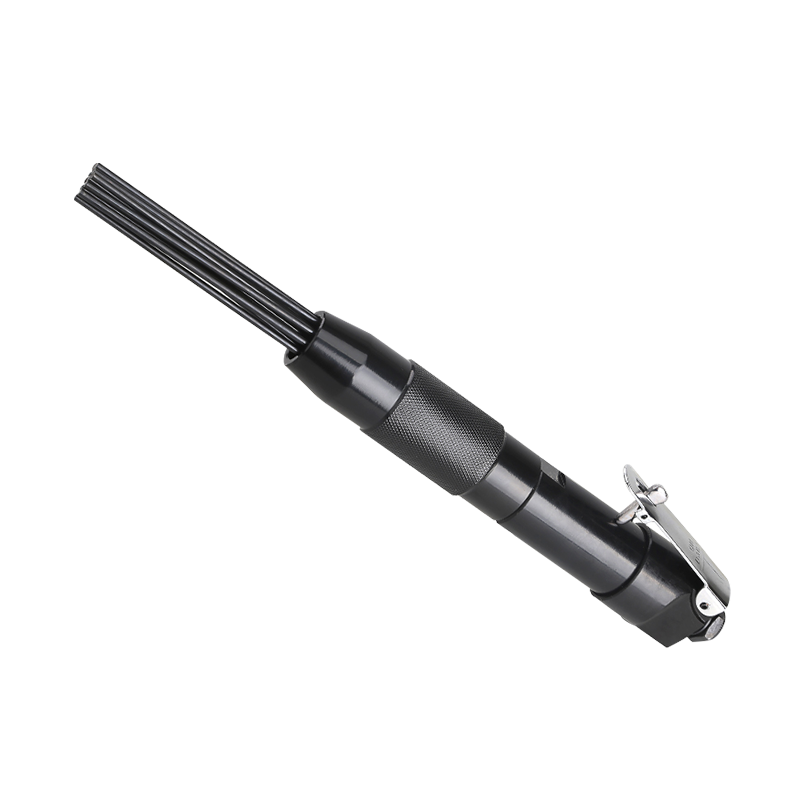
RH-464 Pneumatic Corner Needle Scaler
-
RH-460 Mini Compact Pneumatic Air Needle Scaler
-
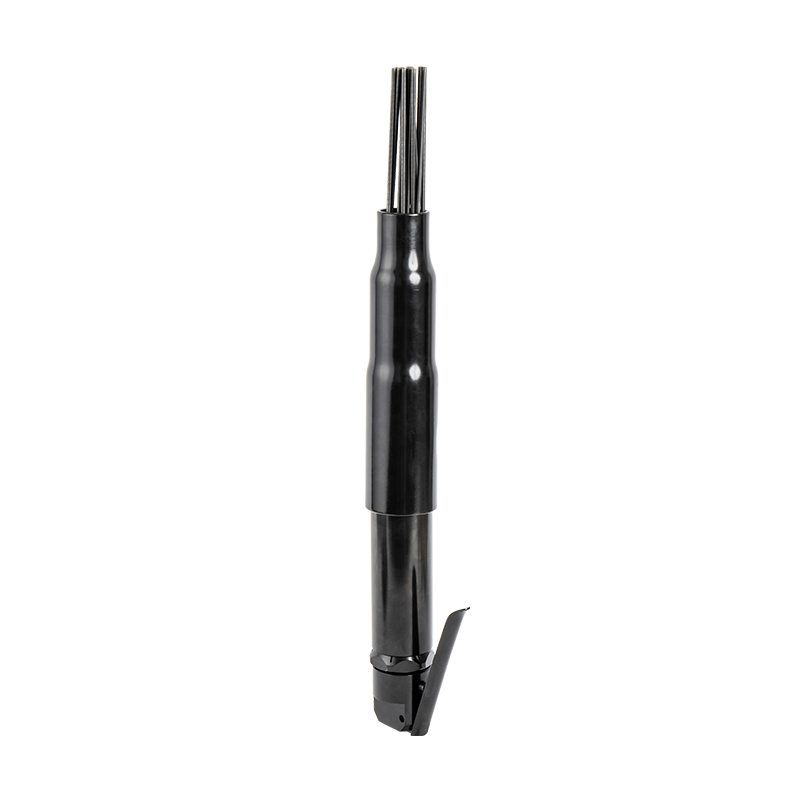
RH-462 Portable Industrial Straight Needle Scaler
-
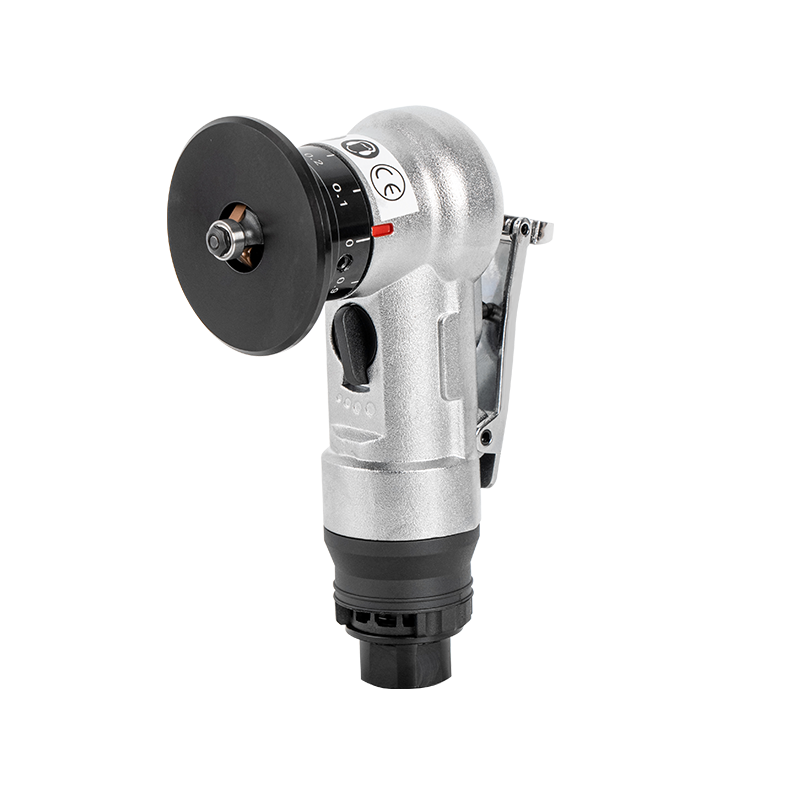
RH-7034C Portable Pneumatic Chamfering Machine
-
RH-7034B Central Pneumatic 4" Air Angle Grinder
-
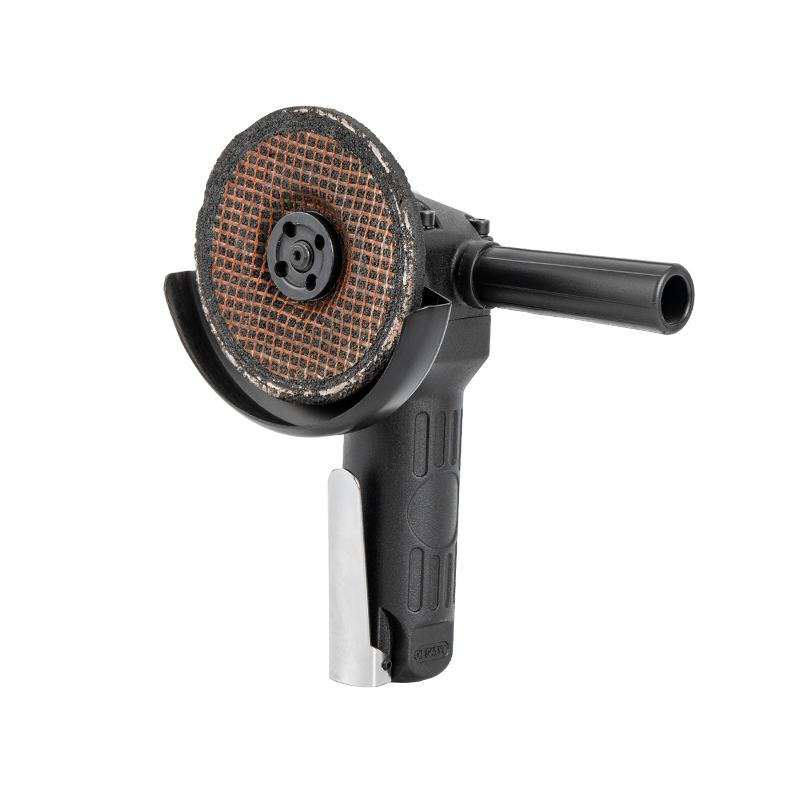
RH-7034D 7" Hand Held Angle Grinder
-
RH-160 1/2" Drive Single Hammer Air Pneumatic Impact Wrench
-
RH-160K Cordless Electric Rechargeable Air Impact Wrench Kit
-
RH-112 1/2" Universal Electric Ratchet Wrench Hand Tool
-
RH-128 1/2" High Torque Electric Ratchet Wrench
-
RH-138 3/8" Long Head Portable Cordless Electric Ratchet Wrench
-
RH-148 1/4" Electric Battery Ratchet Wrench
CONTACT OUR EXPERTS
AND GET A FREE CONSULTATION!
Ningbo Haishu Renhao Pneumatic Co., Ltd.
 Address: Jiangbei District Ningbo City in Zhejiang Province by the Keli industrial ParkL Building 15th
 Phone: +86-139 0668 0779
 Tel: +86-139 0668 0779
 Fax: +86-139 0668 0779
 E-mail:[email protected]


