


 عربى
عربى 中文简体
中文简体Search by posts
Calendar
Product Categories
Industry News
 By Admin
How Innovations in Air Grinder Pen Architecture Define Micro-Machining in the Industry 4.0 Era?
As the field of precision machining pursues the ultimate in surface quality and rotational stability, the pneumatic tool industry is undergoing a technical revolution centered on "bearing architecture." This article explores the technical evolution from basic Pneumatic Air Grinder Pens to advanced multi-bearing supported carving tools, and their core applications in modern manufacturing.
Why is the Pneumatic Air Grinder Pen Still an "Evergreen" in Mold Polishing?
How is the high-speed advantage of the air grinder pen achieved?
As a typical High-speed pneumatic rotary tool, the core power of an air grinder pen originates from its internal high-speed turbine or vane motor. When compressed air is injected onto the vanes through a precision-engineered intake duct, kinetic energy is instantly converted into rotational torque, driving the spindle to rotate at ultra-high speeds of 50,000 to 70,000 RPM. This extreme speed ensures that the cutting force generated upon contact with the workpiece is minimal, preventing material tearing while utilizing high centrifugal force to rapidly discharge micro-debris. At high RPMs, even light pressure allows for efficient material removal, making it an irreplaceable tool for precision mold deburring, metal engraving, and complex part finishing.
What are the practical impacts of lightweight design on long-shift operations?
In precision manufacturing, operators often need to maintain high concentration for hours. Traditional heavy tools cause rapid hand muscle fatigue, leading to tremors that severely compromise machining accuracy. Modern pneumatic pens utilize an extreme "pen-style" ergonomic design, with bodies typically crafted from aerospace-grade aluminum alloy or high-strength composites. Aluminum provides structural strength and thermal dissipation, preventing heat from reaching the operator's hand, while composites further reduce weight and optimize the tool's center of gravity. This lightweight design ensures the tool is as nimble as a drawing pen, maintaining high control stability and comfort even during prolonged micro-carving sessions.
Two-Bearing vs. Triple-Bearing Architecture: Which Pneumatic Air Engraving Pen Suits Your Precision Needs?
In micromachining tools, the number and arrangement of bearings directly determine the "lifeline" of the tool—rotational accuracy and durability.
Technical Selection Comparison: Two-Bearing vs. Triple-Bearing Architecture
|
Dimension |
Two Bearing System |
Triple Bearing System |
|---|---|---|
|
Core Configuration |
Front (1) + Rear (1) |
Front Tandem (2) + Rear (1) |
|
Concentricity Accuracy |
~ 0.03mm - 0.05mm |
≤ 0.01mm (Ultra-precision grade) |
|
Radial Run-out Control |
Good (Standard machining) |
Excellent (Eliminates high-frequency resonance) |
|
Side Load Resistance |
Moderate |
High (Enhanced pressure stability) |
|
Recommended RPM |
35,000 - 55,000 RPM |
55,000 - 75,000+ RPM |
|
Bearing Lifespan |
Standard |
Extended by approx. 40% - 50% |
|
Best Use Case |
Part deburring, general marking |
Medical devices, precision molds, jewelry |
|
Maintenance Cost |
Lower |
Moderate (Requires precise calibration) |
Can a Pneumatic Two-Bearing Air Engraving Pen meet daily industrial needs?
Structural Analysis: A two-bearing system usually adopts a standard "front + rear" layout. By fixing the spindle with two high-precision deep-groove ball bearings, it effectively supports radial loads. For common metal marking, rough mold polishing, and tasks requiring accuracy around 0.05mm, the two-bearing structure provides sufficient stability and cost-effectiveness.
Why do top-tier manufacturing centers prefer the Pneumatic Triple-Bearing Air Engraving Pen?
Core Technology: The breakthrough of the triple-bearing pen lies in its "tandem bearing" layout at the front of the spindle, forming a robust Triple bearing spindle system. This multi-point support architecture significantly increases shaft rigidity. At speeds exceeding 60,000 RPM, the spindle can produce micro-flexing and periodic vibrations. The triple-bearing design alters the natural frequency of the shaft system and, combined with Low vibration air tool technology, effectively absorbs and cancels high-frequency resonance.
Precision Assurance: For medical devices or jewelry-grade micro-engraving, Precision concentricity in engraving is the gold standard. The triple-point calibration improves dynamic concentricity to the 0.01mm level, ensuring clean, burr-free edges. Furthermore, as a Micro Air Die Grinder, the triple-bearing design can handle heavier side loads when processing high-hardness mold steel without significant RPM drops.
How to Extend the Life of Your Air Engraving Pen in High-Intensity Environments?
To manage the lifecycle of a Micro Air Die Grinder, follow these industrial maintenance protocols:
Drainage: The First Line of Defense Air quality is the "food" of pneumatic tools. Drain moisture from the compressor tank, dryer, and FRL (Filter-Regulator-Lubricator) units before and after every shift. Condensation at 0.6MPa can strike motor vanes with a "water hammer effect." Long-term neglect leads to emulsified grease and acidic corrosion, destroying the Low vibration air tool technology performance.
Lubrication: The "Life Jacket" for Bearings For the Triple bearing spindle system, lubrication is vital for both friction reduction and cooling. Ensure the oiler is filled with ISO VG32 pneumatic lubricant, maintaining a drip rate of 2-3 drops per minute. This forms a micron-level oil film that protects contact surfaces and carries away heat generated by high-speed rotation.
Pressure Calibration: Balancing Power and Longevity Maintain tool-end pressure precisely at 0.5-0.7MPa. Excessive pressure causes abnormal centrifugal loads and burns out the spindle; insufficient pressure leads to stalling during contact, which is fatal for Precision concentricity in engraving. Use secondary pressure regulators to eliminate grid fluctuations.
Cleaning: Protecting Grip Accuracy and Balance Clean the collet of metal chips and dust with compressed air after every use. Hard particles in the collet lead to rust and "eccentric run-out," which creates stress that can quickly cause the Pneumatic Air Grinder Pen to fail.
Proper Storage: Detail Management Develop the habit of "tool docking." Hang the tool vertically on a dedicated rack in a dry area. Never leave it on a machine table covered in cutting fluids or coolants. If fluids enter the motor through the exhaust, they destroy the lubrication film and corrode the precision-ground spindle surfaces.
Recommended products
-
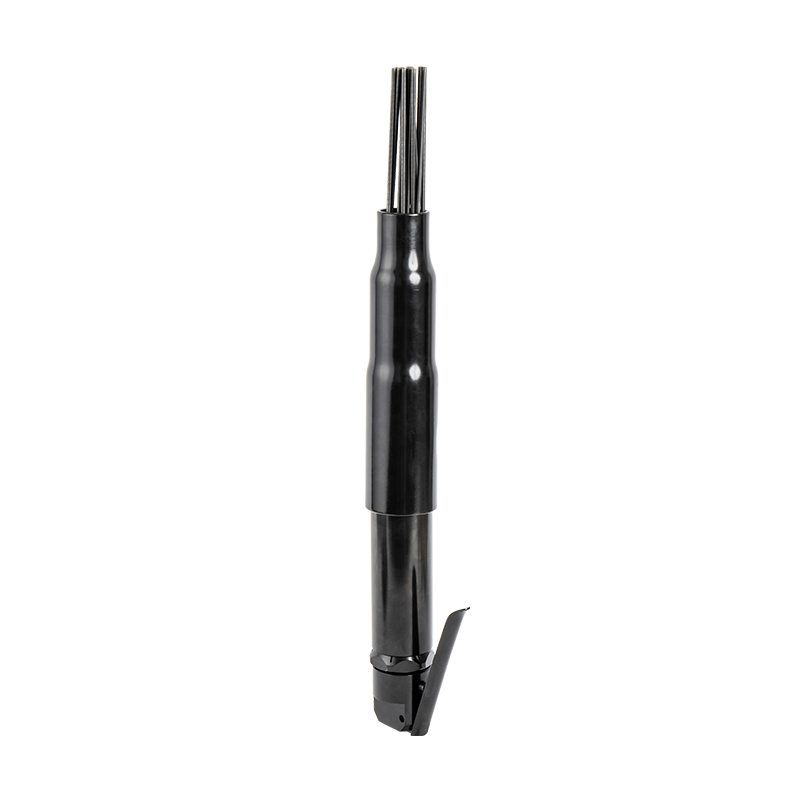
RH-464 Pneumatic Corner Needle Scaler
-
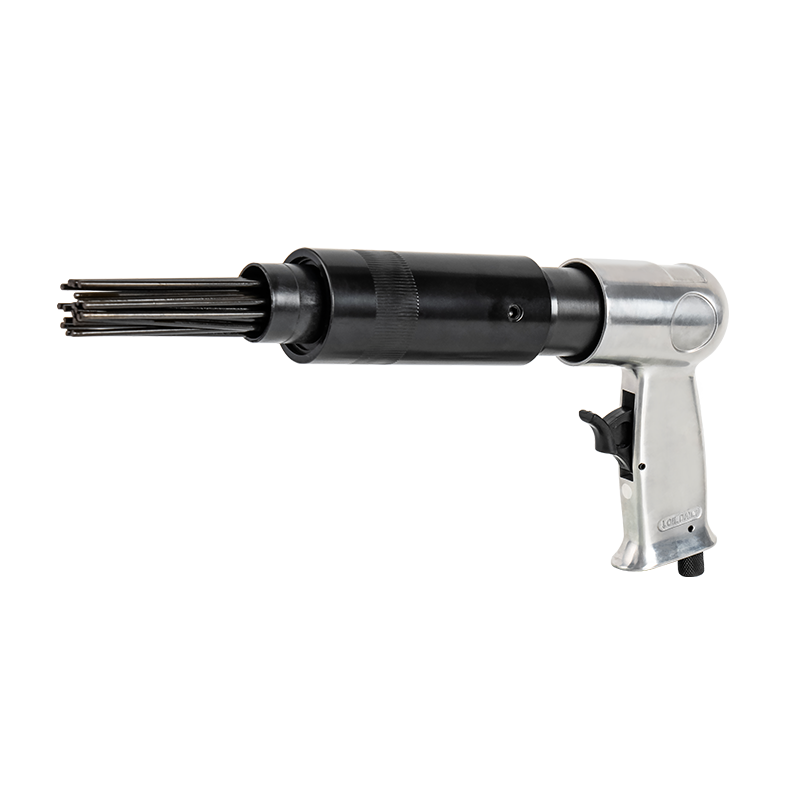
RH-460 Mini Compact Pneumatic Air Needle Scaler
-
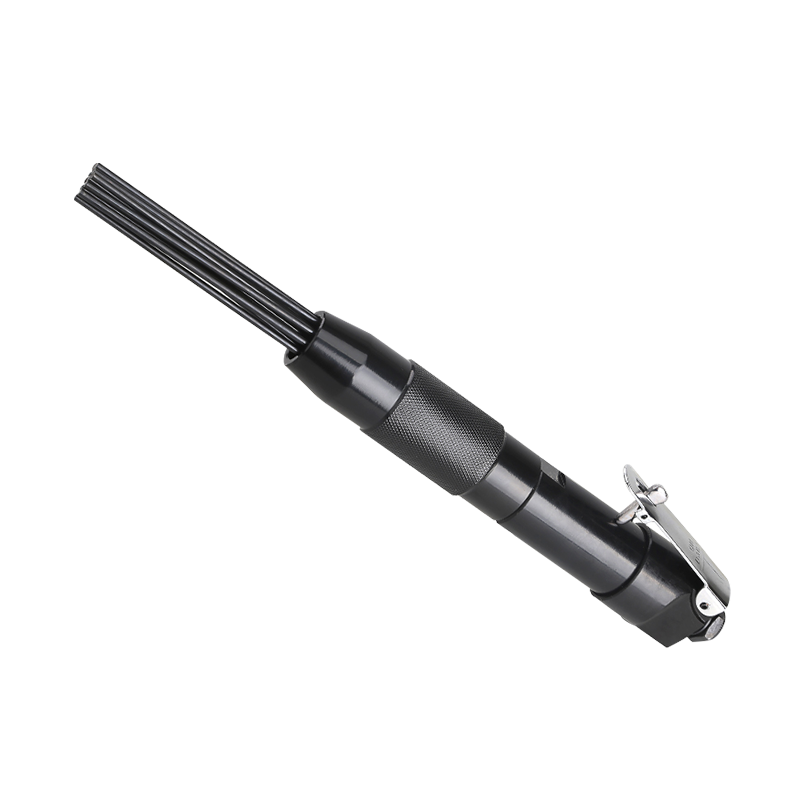
RH-462 Portable Industrial Straight Needle Scaler
-
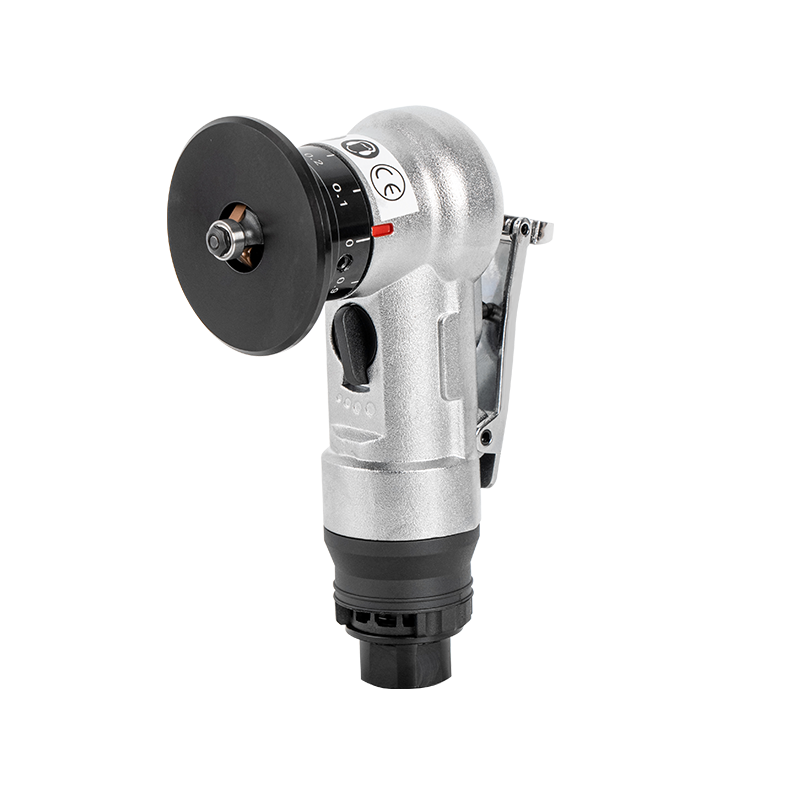
RH-7034C Portable Pneumatic Chamfering Machine
-
RH-7034B Central Pneumatic 4" Air Angle Grinder
-
RH-7034D 7" Hand Held Angle Grinder
-
RH-160 1/2" Drive Single Hammer Air Pneumatic Impact Wrench
-
RH-160K Cordless Electric Rechargeable Air Impact Wrench Kit
-
RH-112 1/2" Universal Electric Ratchet Wrench Hand Tool
-
RH-128 1/2" High Torque Electric Ratchet Wrench
-
RH-138 3/8" Long Head Portable Cordless Electric Ratchet Wrench
-
RH-148 1/4" Electric Battery Ratchet Wrench
CONTACT OUR EXPERTS
AND GET A FREE CONSULTATION!
Ningbo Haishu Renhao Pneumatic Co., Ltd.
 Address: Jiangbei District Ningbo City in Zhejiang Province by the Keli industrial ParkL Building 15th
 Phone: +86-139 0668 0779
 Tel: +86-139 0668 0779
 Fax: +86-139 0668 0779
 E-mail:[email protected]


