What an Air Impact Wrench Is and How Single Hammer Compares to Twin Hammer
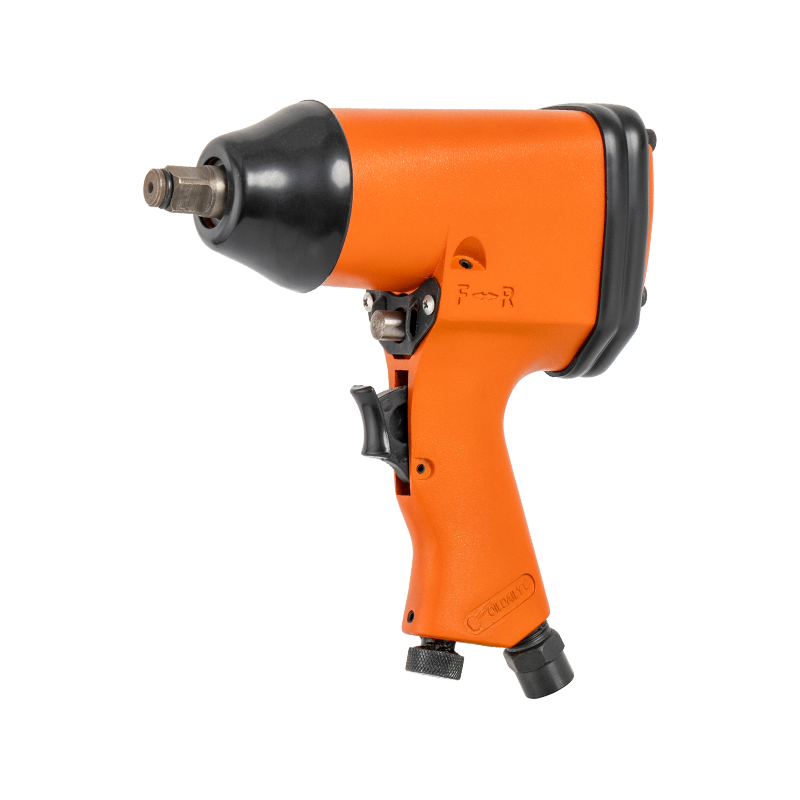
An Air Impact Wrench is a pneumatic power tool that delivers high-torque rotational force to fasteners through a series of rapid rotational impact blows generated by compressed air driving a hammer and anvil mechanism, enabling fast tightening and loosening of bolts, nuts, and fasteners that would be impractical or physically impossible with hand tools. It is the dominant power tool category in automotive repair, tire service, heavy equipment maintenance, construction, and industrial assembly because of its exceptional torque-to-weight ratio, continuous duty capability, and the ability to deliver impact forces well beyond what any electric motor of equivalent weight could sustain.
The Single Hammer Air Impact Wrench uses one hammer element that strikes the anvil once per rotor revolution, producing a single high-energy impact per cycle. This design is simpler, more robust, less expensive to manufacture, and delivers higher peak torque per individual impact than twin-hammer equivalents. The trade-off is higher vibration, lower impact frequency (impacts per minute), and noisier operation compared to twin-hammer designs of equivalent size. The Single Hammer Air Impact Wrench is the correct choice when maximum peak torque is the priority, budget efficiency matters, and the tool will be used for heavy-duty applications where robust simplicity outlasts sophisticated mechanisms in a demanding environment.
For precision assembly, sustained high-volume use, and noise-sensitive professional environments, a twin-hammer Air Impact Wrench delivers smoother torque output, lower vibration, and better operator comfort at a higher purchase price. The selection between the two is a genuine engineering trade-off, not a simple better-or-worse judgment.
How an Air Impact Wrench Works: The Pneumatic Hammer and Anvil Mechanism
Understanding how an Air Impact Wrench works at the mechanical level is the foundation for intelligent tool selection, correct application, and effective troubleshooting when performance issues arise. The mechanism is elegant in its simplicity but sophisticated in its execution.
The Compressed Air Motor: Converting Air Pressure to Rotation
Compressed air enters the Air Impact Wrench through the inlet fitting and passes through the trigger valve, which the operator controls to regulate airflow. The air then enters the vane motor, which is the rotary engine at the heart of the tool. A vane motor consists of a cylindrical rotor mounted eccentrically inside a cylindrical housing. The rotor carries multiple spring-loaded vanes (typically 4 to 7) that slide radially in slots machined into the rotor body. As compressed air enters the motor housing, it pushes against the exposed faces of the vanes, causing the rotor to spin at speeds of typically 8,000 to 22,000 RPM with no load applied.
The vane motor is exceptionally compact and power-dense for its size, which explains why an Air Impact Wrench weighing 1.5 to 2.5 kg can produce torque outputs of 300 to 1,100 Nm that would require a much larger and heavier electric motor to match. The motor also has virtually unlimited continuous duty capability because compressed air carries heat away from the motor during operation, preventing the thermal buildup that limits electric motor continuous output.
The Hammer and Anvil: Converting Rotation to Torque Impacts
The vane motor's rotational output is not transmitted directly to the output drive (the square drive that accepts sockets). Instead, it passes through the hammer mechanism, which accumulates rotational kinetic energy and releases it in discrete, high-energy rotational impact pulses:
- The motor drives the hammer assembly, which rotates and accumulates kinetic energy in the rotating mass of the hammer element.
- When the hammer lug reaches the anvil lug on the output drive, it strikes it with a powerful rotational blow, transmitting the accumulated kinetic energy as a brief, intense torque pulse to the output drive.
- The hammer releases from the anvil and continues rotating, re-accumulating kinetic energy for the next impact. This release and re-engagement is what produces the characteristic rapid clicking sound of an Air Impact Wrench during operation.
- Each impact delivers a brief but powerful torque pulse that overcomes the static friction of the fastener. Between impacts, the fastener cannot rotate back because its thread friction holds it in the advanced position until the next impact drives it further.
This impact mechanism is what makes Air Impact Wrench tools so effective at loosening corroded or over-torqued fasteners. The peak torque of each impact significantly exceeds the steady-state torque that the motor could deliver continuously, and the brief duration of each impact means the energy is delivered too quickly for the fastener to distribute the stress into the surrounding structure, concentrating the loosening force directly on the thread interface.
Single Hammer Air Impact Wrench: Design, Characteristics, and When to Choose It
The Single Hammer Air Impact Wrench is the original hammer mechanism design used in Air Impact Wrench tools since their commercial introduction. It remains the most widely used mechanism type globally despite the development of twin-hammer and other advanced designs, because its combination of simplicity, peak torque capability, and cost efficiency continues to make it the most appropriate choice for a large proportion of professional applications.
How the Single Hammer Mechanism Operates
In a Single Hammer Air Impact Wrench, the hammer assembly consists of one hammer element, typically a steel block or cam-shaped mass, that rotates with the motor and carries a single set of driving lugs. These driving lugs engage the two lugs on the anvil (the component that connects to the output drive square) once per rotation. Each time the single hammer's lugs contact the anvil lugs, they deliver one impact, then the hammer's cam geometry allows it to disengage and continue rotating for the next cycle.
The single-hammer geometry means that the hammer element is relatively large and heavy compared to the individual hammers in a twin-hammer design, because it must fit the full cross-sectional area of the mechanism housing. This larger mass delivers more kinetic energy per individual impact than each of the two smaller hammers in a twin-hammer design of equivalent size. At equivalent motor speed and air pressure, a Single Hammer Air Impact Wrench typically delivers 15% to 25% higher peak torque per individual impact than a twin-hammer design of the same drive size, which is why single-hammer tools are preferred for applications requiring maximum breakaway torque.
The Vibration and Noise Profile of Single Hammer Air Impact Wrench
The single impact per revolution creates a characteristic vibration and noise profile that distinguishes the Single Hammer Air Impact Wrench from twin-hammer alternatives. Because impacts occur at the rotor frequency (typically 130 to 220 impacts per second at operating speed), and because each impact involves the sudden engagement and release of the full hammer mass, the vibration amplitude per impact is higher than in twin-hammer designs where two smaller hammers share the impact cycle.
Vibration levels in a typical Single Hammer Air Impact Wrench range from 8 to 16 m/s² (meters per second squared) measured at the handle, compared to 4 to 10 m/s² for equivalent twin-hammer designs. Under EU Physical Agents Directive 2002/44/EC, the daily vibration exposure action value is 2.5 m/s² and the limit value is 5.0 m/s², meaning that professional daily use of a Single Hammer Air Impact Wrench in the higher vibration range requires vibration exposure management including rotation of tasks, anti-vibration gloves, and monitoring programs to prevent Hand-Arm Vibration Syndrome (HAVS) over a working lifetime.
Noise output from a Single Hammer Air Impact Wrench typically ranges from 98 to 112 dB(A) during operation, compared to 94 to 106 dB(A) for twin-hammer designs at equivalent torque output. At these levels, hearing protection is mandatory for any use beyond a few seconds per session.
Applications Where Single Hammer Air Impact Wrench Excels
The Single Hammer Air Impact Wrench is the superior choice in specific application contexts:
- Heavy equipment and large truck maintenance: Removing and installing wheel lug nuts on semi-trucks, mining vehicles, and agricultural equipment involves fasteners torqued to 400 to 900 Nm or more. The peak torque advantage of single-hammer designs is most pronounced in these high-load applications where twin-hammer mechanisms with lower individual impact energy may require more time and attempts to break loose heavily corroded or overtorqued fasteners.
- Structural steel and construction fastener work: Installing and removing high-strength structural bolts (Grade 8.8, 10.9, and 12.9 metric, or SAE Grade 5 and Grade 8) in steel framing and bridge construction involves sustained torque requirements at the high end of most Air Impact Wrench capability ranges. The robust simplicity of single-hammer designs makes them more reliable in harsh construction site environments where tool abuse, dust, moisture, and extreme temperature are routine.
- Budget-constrained professional workshops: A quality Single Hammer Air Impact Wrench in the 1/2 inch drive category typically costs 20% to 40% less than a comparable twin-hammer model with equivalent air consumption and size specifications. For workshops that need to equip multiple technicians, this cost difference is commercially significant and justifies the vibration trade-off for many operational contexts.
- Low-frequency, high-intensity use: Applications where the Air Impact Wrench is used in short bursts for demanding fastener work interspersed with other non-impact tasks expose operators to vibration for shorter cumulative daily periods, reducing the practical significance of the higher per-use vibration of single-hammer designs. A mechanic using an Air Impact Wrench for 30 to 60 minutes per day in heavy truck work accumulates lower daily vibration exposure than a tire technician using a twin-hammer tool continuously for 8 hours.
Single Hammer vs Twin Hammer Air Impact Wrench: A Complete Performance Comparison
The choice between a Single Hammer Air Impact Wrench and a twin-hammer Air Impact Wrench is one of the most consequential tool selection decisions in a professional workshop. Both mechanism types can perform all the same basic Air Impact Wrench tasks, but each has a distinct performance profile that makes it superior for specific use patterns and environments.
Mechanism Differences and Their Performance Consequences
In a twin-hammer Air Impact Wrench, two hammer elements (each approximately half the mass of the single hammer in an equivalent single-hammer tool) are positioned 180 degrees apart on the hammer assembly. Each hammer delivers one impact per revolution, so two impacts occur per rotor revolution rather than one. This doubles the impact frequency at the same rotor speed, producing twice as many impacts per minute (IPM) from the same motor speed.
The doubling of impact frequency has several performance consequences that explain the twin-hammer design's preference in high-volume, precision-sensitive applications:
- Smoother torque delivery: With twice as many impacts per revolution, the torque is delivered in a more continuous, less pulsed manner. This makes the tool easier to control when approaching target torque levels and produces a more even tightening of fasteners that reduces the risk of fastener or component damage from individual high-energy impacts.
- Lower vibration per impact: Each individual impact in a twin-hammer mechanism is delivered by a smaller, lighter hammer element, producing lower vibration amplitude per impact even though the same total energy is delivered across the two impacts per revolution. The result is meaningfully lower vibration at the handle, typically 35% to 50% less than equivalent single-hammer designs.
- Better fastener sensing: The more frequent, smaller impacts allow an experienced operator to better sense the fastener's resistance changing as it approaches its seated or loosened condition, enabling more controlled stopping without overshooting the target condition. With single-hammer impacts, each individual impact delivers more energy, making it harder to stop precisely at target torque without applying one impact too many.
Head-to-Head Performance Table: Single Hammer vs Twin Hammer
| Performance Parameter |
Single Hammer Air Impact Wrench |
Twin Hammer Air Impact Wrench |
Advantage |
| Peak torque per impact |
Higher |
Lower (two smaller impacts) |
Single Hammer |
| Impacts per minute (IPM) |
Lower (1 per revolution) |
Higher (2 per revolution) |
Twin Hammer |
| Handle vibration level |
Higher (8 to 16 m/s²) |
Lower (4 to 10 m/s²) |
Twin Hammer |
| Noise level |
Higher (98 to 112 dB(A)) |
Lower (94 to 106 dB(A)) |
Twin Hammer |
| Torque output smoothness |
More pulsed |
Smoother |
Twin Hammer |
| Mechanism complexity |
Simpler |
More complex |
Single Hammer |
| Purchase cost |
Lower (20% to 40%) |
Higher |
Single Hammer |
| Maintenance simplicity |
Simpler (fewer components) |
More components to service |
Single Hammer |
| Best for heavy-duty breakaway |
Yes |
Less optimal |
Single Hammer |
| Best for high-volume precision assembly |
Less optimal |
Yes |
Twin Hammer |
Complete performance comparison between Single Hammer Air Impact Wrench and twin hammer Air Impact Wrench across key operational criteria
Air Impact Wrench Drive Sizes and Their Applications
Every Air Impact Wrench is defined first by its drive size, the square output drive that accepts sockets and determines the range of fastener sizes the tool can work with and the structural strength of the drive connection between tool and socket. Drive size is the single most important specification to match to the intended application before any other tool characteristic is evaluated.
1/4 Inch Drive Air Impact Wrench
The 1/4 inch drive Air Impact Wrench is the smallest commercially significant category, designed for fasteners from M4 to M10 (metric) or 1/4 to 3/8 inch (SAE). Maximum torque output is typically 40 to 100 Nm. Applications include electronics assembly, automotive trim and interior work, and precision mechanical applications where the controlled, limited torque of the 1/4 inch drive prevents fastener damage from overtorquing that larger drives would risk. Single-hammer designs in 1/4 inch drive are relatively uncommon because the small hammer mass limits the incremental advantage over twin-hammer in this size class.
3/8 Inch Drive Air Impact Wrench
The 3/8 inch drive Air Impact Wrench covers the range of passenger car underbody work, motorcycle maintenance, and general mechanical applications involving fasteners from M8 to M16. Maximum torque output typically ranges from 100 to 300 Nm. The 3/8 inch drive is prized for its compact size and low weight, which allows access to confined spaces inside wheel arches, engine bays, and underbody components where the larger 1/2 inch drive tool would not fit. Single Hammer Air Impact Wrench designs in 3/8 inch drive are well suited to brake caliper bolt removal, suspension component work, and engine accessory fasteners where the compact size advantage of 3/8 inch drive is needed alongside adequate breakaway torque.
1/2 Inch Drive Air Impact Wrench
The 1/2 inch drive Air Impact Wrench is the most widely used size globally, serving as the standard professional tool for passenger car and light truck maintenance, general industrial fastening, and construction applications. Maximum torque output ranges from 300 to 1,100 Nm, covering virtually all passenger vehicle fastener requirements including wheel lug nuts (typically 90 to 200 Nm), suspension components, and engine work. The 1/2 inch drive is the most commercially important size in both Single Hammer Air Impact Wrench and twin-hammer categories, with the widest range of products, the deepest available selection of matching impact sockets, and the most competitive pricing from global manufacturers.
For most automotive workshops making their first Air Impact Wrench purchase, a 1/2 inch drive Single Hammer Air Impact Wrench at 600 to 800 Nm maximum torque represents the best value entry point into professional pneumatic impact tooling, providing sufficient torque for all passenger vehicle work while the lower cost compared to premium twin-hammer equivalents allows budget allocation to other essential workshop equipment.
3/4 Inch Drive Air Impact Wrench
The 3/4 inch drive Air Impact Wrench is a heavy-duty category for large trucks, agricultural equipment, construction machinery, and industrial applications where fastener sizes and torque requirements exceed 1/2 inch drive capability. Maximum torque typically ranges from 1,000 to 2,500 Nm. These tools are significantly heavier (4 to 7 kg) than 1/2 inch models and require higher air flow (8 to 14 CFM at 90 PSI) that may necessitate a larger compressor than small workshops typically own. Single-hammer designs predominate in 3/4 inch drive because the primary application (maximum breakaway torque for large, potentially corroded fasteners) favors the higher peak torque per impact of single-hammer geometry.
1 Inch Drive Air Impact Wrench
The 1 inch drive Air Impact Wrench represents the maximum size in the standard commercial category, with torque outputs of 2,000 to 5,000 Nm for the most extreme industrial, mining, and heavy construction applications. These tools are almost exclusively single-hammer designs because the application profile (breaking loose the largest, most seized fasteners in industrial equipment) demands maximum individual impact energy that only the single-hammer geometry with its large, heavy hammer mass can deliver. At this scale, the vibration disadvantage of single-hammer designs is accepted as a necessary trade-off for the torque capability that no other mechanism type can match in a handheld tool format.
Air Impact Wrench Key Specifications: What to Evaluate Before Buying
An Air Impact Wrench purchase decision based primarily on advertised maximum torque figures misses most of the specifications that determine whether the tool will actually perform well in the buyer's specific application. The following specification categories are each important and should be evaluated together rather than in isolation.
Maximum Torque: Tightening vs Loosening Direction
Air Impact Wrench maximum torque specifications are almost always provided separately for tightening and loosening (breakaway) directions, and the values are typically different. Most professional Air Impact Wrench designs deliver 30% to 50% more torque in the loosening direction than in the tightening direction because the internal cam geometry of the hammer mechanism is optimized asymmetrically: maximum energy is delivered in the loosening direction to break loose seized fasteners, while the tightening direction torque is deliberately limited to reduce the risk of overtightening and fastener or component damage.
When comparing specifications between different Air Impact Wrench models, always compare tightening torque figures for tightening application assessments and loosening torque for removal application assessments. A tool specified at 1,000 Nm maximum loosening with only 600 Nm maximum tightening provides a different performance profile than one specified at 800 Nm in both directions, and which is better depends entirely on whether the primary use is removal or installation of fasteners.
Free Speed and Impacts Per Minute
Free speed (no load RPM) and impacts per minute (IPM) are related but distinct specifications. Free speed tells how fast the anvil rotates before the hammer mechanism engages under load, which determines how quickly the tool runs fasteners down before impact mode begins. Higher free speed reduces the non-productive run-down time before the impact mechanism engages, which is commercially significant in high-volume operations like tire shops where accumulated seconds across hundreds of fasteners per day translate to meaningful productivity differences.
Impacts per minute measures how frequently the hammer delivers blows to the anvil during engaged operation. For a Single Hammer Air Impact Wrench, IPM equals the motor RPM under load (typically 1,500 to 2,200 RPM, significantly below free speed due to load). For a twin-hammer design at the same motor speed, IPM is doubled because two impacts occur per revolution. Single Hammer Air Impact Wrench designs typically deliver 1,200 to 1,800 IPM, while twin-hammer designs of equivalent motor speed deliver 2,400 to 3,600 IPM.
Air Consumption and Required Compressor Capacity
Air consumption is the specification most often overlooked by buyers who focus exclusively on torque output, and it is the one most likely to determine whether a purchased Air Impact Wrench can actually achieve its rated performance in the buyer's existing air system. Air consumption is measured in CFM (cubic feet per minute) or L/min and represents the volume of compressed air the tool consumes during sustained operation at its rated operating pressure (typically 90 PSI for most professional Air Impact Wrench specifications).
A standard professional 1/2 inch drive Air Impact Wrench requires 4 to 7 CFM at 90 PSI for sustained operation. A larger 3/4 inch drive tool requires 8 to 14 CFM. If the shop compressor cannot supply the tool's rated CFM continuously, the compressor tank pressure drops below the tool's required operating pressure during use, reducing torque output, potentially by 20% to 40% below the tool's rated specification. Many complaints about an Air Impact Wrench "not having enough power" are actually complaints about inadequate compressor capacity rather than tool deficiency.
Air Hose Size and Length Considerations
The hose connecting the shop air supply to the Air Impact Wrench is a frequently overlooked factor that significantly affects available air pressure at the tool inlet. Undersized hose diameter creates pressure drop along the hose length due to flow resistance, reducing the pressure available at the tool below the supply pressure at the compressor outlet. The minimum recommended hose bore for a 1/2 inch drive Air Impact Wrench is 3/8 inch (10 mm) internal diameter; larger 1/2 inch bore hose is preferred for runs above 10 meters or for higher consumption 3/4 inch and 1 inch drive tools. Using 1/4 inch bore hose (common for inflation and light tool use) on a professional Air Impact Wrench can reduce available pressure at the tool by 15 to 30 PSI below supply pressure at operating flow rates, which directly reduces maximum torque output by a proportional amount.
Air Impact Wrench Safety: Requirements, PPE, and Best Practices
The Air Impact Wrench is one of the most productive but also one of the most potentially hazardous power tools in professional use when safety practices are not consistently followed. The hazards specific to Air Impact Wrench use require specific protective equipment and operating practices that go beyond general power tool safety.
Impact-Rated Sockets: The Non-Negotiable Safety Requirement
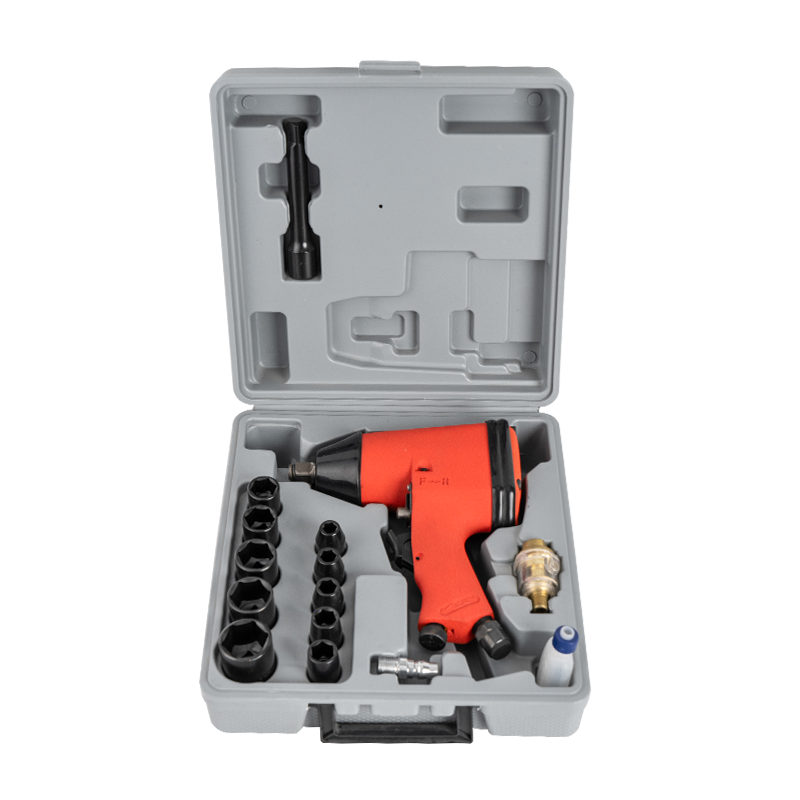
The most critical Air Impact Wrench safety requirement, and one that is still routinely violated in workshops, is the exclusive use of impact-rated sockets on Air Impact Wrench drives. Standard chrome-vanadium hand tool sockets are manufactured for static torque loads and have heat treatment specifications that optimize hardness (making them resistant to wear) but not toughness (making them resist brittle fracture under impact loading). When a standard socket is used on an Air Impact Wrench, each impact event subjects it to a rapid loading cycle that standard sockets are not designed to survive. The result is eventual catastrophic brittle fracture in which the socket shatters explosively, projecting metal fragments at velocities sufficient to cause serious injury.
Impact-rated sockets are manufactured from chromium-molybdenum steel (Cr-Mo) with a toughening heat treatment that allows controlled deformation under impact loading rather than brittle fracture. They are identified by their black oxide finish (versus the chrome finish of standard sockets) and carry ANSI/ASME impact socket designation on their packaging. No standard chrome socket should ever be used on any Air Impact Wrench regardless of the driver's level of experience or perceived urgency of the task.
Hearing Protection: Mandatory, Not Optional
At 98 to 112 dB(A) during operation, an Air Impact Wrench exceeds the US OSHA 8-hour permissible exposure limit of 90 dB(A) within minutes without hearing protection. At 105 dB(A), OSHA allows only 1 hour of exposure per day without protection; at 110 dB(A), only 30 minutes. Hearing loss from noise is permanent, cumulative, and does not reverse when noise exposure is reduced. Every Air Impact Wrench operation, regardless of duration, requires hearing protection with an adequate Noise Reduction Rating (NRR) for the tool's operating noise level. Earmuffs with NRR 25 to 30 or properly fitted foam earplugs with NRR 29 to 33 provide adequate protection for most Air Impact Wrench noise environments.
Eye and Face Protection
The impact force of an Air Impact Wrench is sufficient to eject corroded fastener material, rust particles, lubricant spray, and socket fragments at high velocity. Safety glasses rated to ANSI Z87.1 minimum are mandatory for any Air Impact Wrench operation, with face shields additionally recommended when working overhead, on corroded fasteners where fragmentation is expected, or in any orientation where the exhaust air stream is directed toward the face.
Correct Torque Control Practice
An Air Impact Wrench is not a precision torque tool and must not be relied upon as the sole fastening method for safety-critical fasteners. For all fasteners where the specified tightening torque is safety-critical (wheel lug nuts, brake caliper bolts, suspension components, cylinder head bolts), the correct professional practice is to use the Air Impact Wrench to run the fastener down to near-seated position, then complete the final tightening with a calibrated click-type torque wrench set to the manufacturer's specified torque value. This two-step process combines the speed efficiency of the Air Impact Wrench with the accuracy requirement of precision torque control that safety-critical fasteners demand.
Air Impact Wrench Maintenance: Keeping Peak Performance Over the Long Term
An Air Impact Wrench is a precision pneumatic tool with internal components that depend on adequate lubrication to maintain performance and service life. Neglected maintenance is the primary cause of gradual performance decline that many users misattribute to tool age or compressor problems when the actual cause is drying and wear of the vane motor and hammer mechanism from inadequate lubrication.
Daily Lubrication: The Most Important Maintenance Practice
The vane motor and hammer mechanism of an Air Impact Wrench require a thin film of oil to function at design performance and to prevent metal-to-metal contact that causes accelerated wear of the vanes, rotor, and hammer components. The air supply from a shop compressor is dry (or should be, if the compressor is properly filtered), which means the tool receives no oil from the air supply unless one of two systems is in place:
- Inline air line lubricator: A lubricator unit installed in the air line near the tool connection point that adds a controlled drip of pneumatic tool oil to the air stream. A drip rate of 1 to 2 drops per minute of tool operation is the standard recommendation for most Air Impact Wrench applications. Inline lubricators provide the most consistent and reliable lubrication and are the recommended system for any Air Impact Wrench used in a fixed workshop location.
- Direct oiling before each use: Adding 3 to 5 drops of pneumatic tool oil into the air inlet port of the Air Impact Wrench at the start of each work session provides adequate lubrication for a single day's normal use. This method is appropriate for portable or intermittently used tools and for situations where an inline lubricator is not installed.
Never use WD-40, general machine oil, or automotive engine oil in an Air Impact Wrench. These products either evaporate too rapidly (WD-40) or are too viscous and do not aerosolize properly for pneumatic tool use (engine oil), and both leave residues that can clog vane motor passages and reduce performance. Use only petroleum-based or synthetic pneumatic tool oil specifically formulated for air tool lubrication.
Air Filter, Regulator, and Moisture Trap Maintenance
The air quality delivered to an Air Impact Wrench has as much impact on tool performance and longevity as the oil lubrication. Three air treatment components at the tool's air supply connection point maintain air quality:
- Particulate filter: Removes dust, rust, and scale from the air line that would otherwise enter the tool and accelerate abrasive wear of the vane motor. Inspect and clean or replace filter elements every 3 months in typical shop environments; more frequently in dusty or high-use environments.
- Moisture separator or water trap: Removes condensed water from the compressed air before it reaches the tool. Water in the air supply washes out the lubricating oil film in the motor and hammer mechanism, causing dry metal-to-metal contact and accelerated wear. Drain the moisture separator daily (or after each extended use session in humid climates) to prevent accumulated water from being blown into the tool.
- Pressure regulator: Maintains a consistent air supply pressure to the tool at the manufacturer's rated operating pressure (typically 90 PSI for most professional Air Impact Wrench specifications). Operating consistently above rated pressure stresses internal components and seals; operating below rated pressure reduces available torque. Calibrate the regulator setting with a gauge at the tool inlet position (not at the compressor) to account for hose pressure drop.
Periodic Internal Service: Rebuild Kits and Replacement Parts
Most professional-grade Air Impact Wrench tools from established manufacturers are serviceable with rebuild kits that include replacement vanes, O-rings, seals, and hammer mechanism components. Annual internal inspection and replacement of worn vanes (which progressively shorten and reduce motor efficiency as they wear) is recommended for tools in daily professional use. The vane motor vanes in a Single Hammer Air Impact Wrench running 8 hours per day in a professional shop typically need replacement every 1 to 2 years; hammer and anvil components have longer service lives of 3 to 7 years before replacement is needed for performance restoration.
Selecting the Right Air Impact Wrench for Your Application
The practical decision of which Air Impact Wrench to select, and specifically whether a Single Hammer Air Impact Wrench or a twin-hammer design best serves a given application, reduces to three questions answered in sequence:
Question 1: What Drive Size Does Your Application Require?
Match the drive size to the fastener size range you work with most frequently. Use the application table below to identify the correct drive size before evaluating any other specifications, because drive size determines the entire structural capability of the tool-socket-fastener system:
| Drive Size |
Typical Fastener Range |
Max Torque Range |
Primary Professional Application |
| 1/4 inch |
M4 to M10 |
40 to 100 Nm |
Electronics, trim, light mechanical |
| 3/8 inch |
M8 to M16 |
100 to 300 Nm |
Passenger car underbody, motorcycle |
| 1/2 inch |
M10 to M24 |
300 to 1,100 Nm |
Automotive, light industrial, construction |
| 3/4 inch |
M20 to M42 |
1,000 to 2,500 Nm |
Heavy trucks, construction machinery |
| 1 inch |
M36 and above |
2,000 to 5,000 Nm |
Mining, heavy industrial, structural |
Air Impact Wrench drive size selection guide with fastener range, torque capability, and primary application
Question 2: Is the Primary Requirement Maximum Breakaway Torque or Smooth High-Volume Operation?
If the primary requirement is maximum torque for breaking loose heavily corroded, heavily loaded, or high-specification fasteners in heavy equipment maintenance, structural steel, or oil and gas work, choose a Single Hammer Air Impact Wrench. If the primary requirement is smooth, sustained high-volume fastener installation with lower vibration for operator health in a busy automotive workshop running hundreds of fastening operations per day, a twin-hammer design is the better specification despite its higher cost.
Question 3: Does the Available Air System Support the Tool's Requirements?
Verify before purchasing any Air Impact Wrench that the existing compressor can supply the required CFM at the tool's rated operating pressure at the tool inlet (not at the compressor outlet). A tool with a rated air consumption of 6 CFM cannot deliver rated performance from a compressor capable of only 4 CFM. If the existing air system is marginal for the intended tool, either upgrade the compressor to adequate capacity or select a tool with lower air consumption requirements, even if this means accepting lower torque output than the original specification target.
Frequently Asked Questions
1. What is an Air Impact Wrench and what makes it different from a regular wrench?
An Air Impact Wrench is a pneumatic power tool that delivers high-torque rotational force to fasteners through rapid hammer impacts driven by compressed air, enabling the fast tightening and loosening of bolts and nuts that require far more torque than a human can generate with a hand wrench. A regular wrench delivers continuous static torque limited to the operator's strength and leverage, typically 20 to 50 Nm for sustained hand wrench use. An Air Impact Wrench delivers 300 to 1,100 Nm or more in short, intense impact pulses at rates of 1,200 to 3,600 per minute, making it possible to work with fasteners of any practical size quickly and without operator fatigue. The impact mechanism also provides self-limiting breakaway behavior: the impact pulses concentrate force on the fastener thread interface in a way that overcomes static friction from corrosion or overtorquing that a continuous-torque hand tool cannot match.
2. What is a Single Hammer Air Impact Wrench and what are its advantages?
A Single Hammer Air Impact Wrench is an Air Impact Wrench design in which the hammer mechanism uses one hammer element that strikes the anvil once per motor revolution. The advantages of single-hammer design are: higher peak torque per individual impact than twin-hammer designs of equivalent size, making it more effective for maximum-torque breakaway applications involving heavily corroded or high-torque specification fasteners; simpler internal mechanism with fewer components, improving reliability in harsh environments and reducing repair cost; lower purchase price (20% to 40% less than comparable twin-hammer models); and simpler internal servicing with fewer disassembly steps needed to access wear components. The trade-offs are higher vibration, higher noise, and less smooth torque delivery compared to twin-hammer alternatives.
3. When should I choose a Single Hammer Air Impact Wrench over a twin-hammer model?
Choose a Single Hammer Air Impact Wrench when maximum breakaway torque is the primary requirement, as in heavy truck maintenance, mining equipment service, structural steel fastening, and oil and gas equipment work where individual fastener loads are very high. Also choose single-hammer when budget efficiency is a priority and the application does not require the reduced vibration of twin-hammer designs, when the tool will be used in a harsh environment where mechanism simplicity and robustness are valued over smooth performance, and when the daily vibration exposure from the tool is a small fraction of the work shift so that the higher vibration per use of single-hammer design does not accumulate to regulatory threshold levels.
4. Can I use a standard socket with an Air Impact Wrench?
No. Standard chrome-vanadium sockets must never be used with any Air Impact Wrench. Standard sockets are heat treated for hardness but not toughness, and the rapid impact loading of an Air Impact Wrench can cause them to fracture explosively, ejecting metal fragments that cause serious injury. Use only impact-rated Cr-Mo (chromium-molybdenum) sockets identified by their black oxide finish and ANSI/ASME impact rating designation. Impact-rated sockets are specifically heat treated for controlled deformation under impact loading rather than brittle fracture. This is not optional guidance; it is a fundamental safety requirement for Air Impact Wrench operation in any professional or consumer setting.
5. What air pressure and CFM does a 1/2 inch Air Impact Wrench need?
A standard professional 1/2 inch drive Air Impact Wrench requires a supply pressure of 90 PSI (6.2 bar) at the tool inlet and an air flow rate of 4 to 7 CFM depending on the specific model's motor size and torque rating. Higher-torque models at the upper end of the 1/2 inch drive category (800 to 1,100 Nm) require 6 to 7 CFM; lighter models at 300 to 500 Nm require 4 to 5 CFM. These figures represent sustained operation requirements; short bursts from a compressor tank may be adequate even from a compressor whose continuous CFM output is below the tool's rated consumption, but sustained heavy use will deplete the tank and drop supply pressure below operating threshold.
6. How often should I oil my Air Impact Wrench?
An Air Impact Wrench used regularly in a professional workshop should receive 3 to 5 drops of pneumatic tool oil directly into the air inlet before each work session if an inline air line lubricator is not installed. If an inline lubricator is installed, set the drip rate to 1 to 2 drops per minute of tool operation and check the lubricator oil level weekly. The most reliable indicator that an Air Impact Wrench is receiving adequate lubrication is a small trace of oil mist in the exhaust air during operation; a completely dry exhaust indicates insufficient lubrication. Use only pneumatic tool oil or lightweight air tool oil for this purpose; WD-40, engine oil, and general machine oil are not appropriate substitutes.
7. Why does my Air Impact Wrench seem to have less power than its specification suggests?
The most common causes of an Air Impact Wrench producing less torque than its rating are: insufficient air supply pressure at the tool inlet (check with an inline gauge at the hose connection to the tool, not at the compressor outlet); undersized air hose (use minimum 3/8 inch bore for 1/2 inch drive tools); compressor unable to supply the tool's rated CFM continuously (tank depletes and pressure drops during sustained use); insufficient tool lubrication (dry vane motor loses efficiency rapidly as vanes drag without oil film); worn motor vanes (vanes shorten as they wear, reducing motor efficiency gradually over thousands of operating hours); or water contamination in the air supply washing out the motor oil film. Diagnose in sequence: check air pressure at tool inlet first, then check hose bore, then compressor capacity, then lubrication condition.
8. What is the correct way to store an Air Impact Wrench when not in use?
Store an Air Impact Wrench by first adding 5 to 10 drops of pneumatic tool oil into the air inlet, then triggering the tool briefly (2 to 3 seconds with no socket attached) to distribute the oil through the vane motor and internal passages. This oil coat protects the internal components against corrosion from residual moisture in the air passages during the storage period. Disconnect the air supply and store the tool in its case or a clean, dry location away from dust, moisture, and temperature extremes. Never store the tool with compressed air still connected to an unsecured air supply; inadvertent trigger contact in storage can cause the tool to activate unexpectedly. Remove any socket from the drive before storage to prevent it from becoming the lever that could activate the trigger if the tool is accidentally displaced.
9. Does impact rate (IPM) matter more than maximum torque when selecting an Air Impact Wrench?
Both specifications matter but serve different aspects of performance, and which is more important depends on the application. Maximum torque (specifically breakaway torque in the loosening direction) determines whether the tool can physically overcome the resistance of a stuck or corroded fastener, regardless of how long it takes. Impact rate (IPM) determines how quickly that torque is delivered across multiple impacts and how smoothly the fastener progresses through its loosening or tightening travel. For maximum-force breakaway applications, maximum torque is the primary parameter. For high-volume fastener installation where speed and smooth engagement are priorities, higher IPM (which twin-hammer designs deliver) is more commercially significant than peak torque per impact. A Single Hammer Air Impact Wrench optimizes for maximum torque per impact; a twin-hammer design optimizes for higher IPM at the same motor speed.
10. How do I prevent the Air Impact Wrench from overtightening critical fasteners?
Preventing overtightening of safety-critical fasteners with an Air Impact Wrench requires a two-step process: use the Air Impact Wrench to run the fastener down to near-seated position only, then remove the impact wrench and use a calibrated torque wrench set to the manufacturer's specified torque value for final tightening. This two-step process is standard professional practice for wheel lug nuts, brake caliper bolts, suspension fasteners, and all other fasteners where achieving a specific torque value is safety-critical. The Air Impact Wrench's torque output is inherently variable (affected by air pressure, tool condition, air hose length, and individual impact energy variation) and is not accurate enough for final torque control on safety-critical fasteners without torque wrench verification. Some advanced Air Impact Wrench designs include electronic torque limiting features, but these are calibration aids rather than certified torque control systems and should not replace torque wrench verification for critical applications.



 عربى
عربى 中文简体
中文简体 By Admin
 Address: Jiangbei District Ningbo City in Zhejiang Province by the Keli industrial ParkL Building 15th
 Phone: +86-139 0668 0779
 Tel: +86-139 0668 0779
 Fax: +86-139 0668 0779
 E-mail:[email protected]

